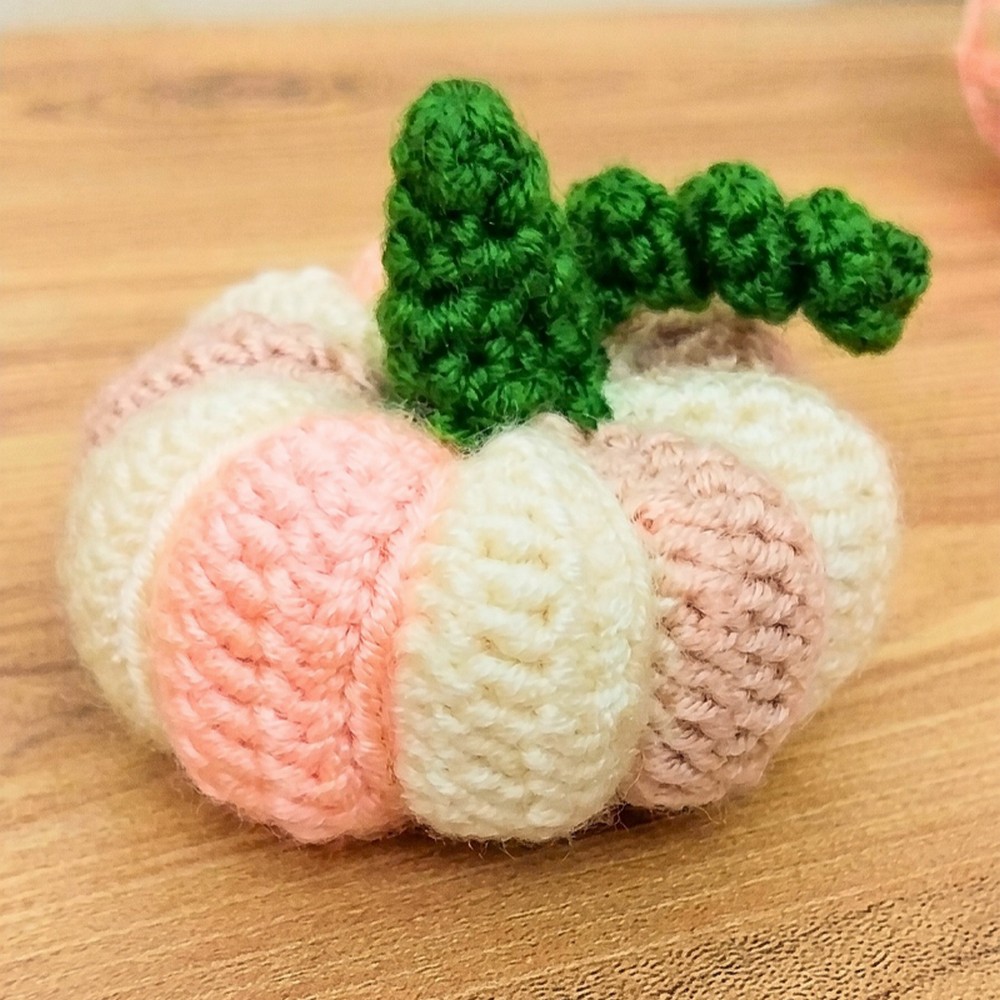
Looking for cozy autumn decor? This pastel crochet pumpkin combines striped colors, ribbed texture, and curly green foliage for a charming handmade seasonal accent.
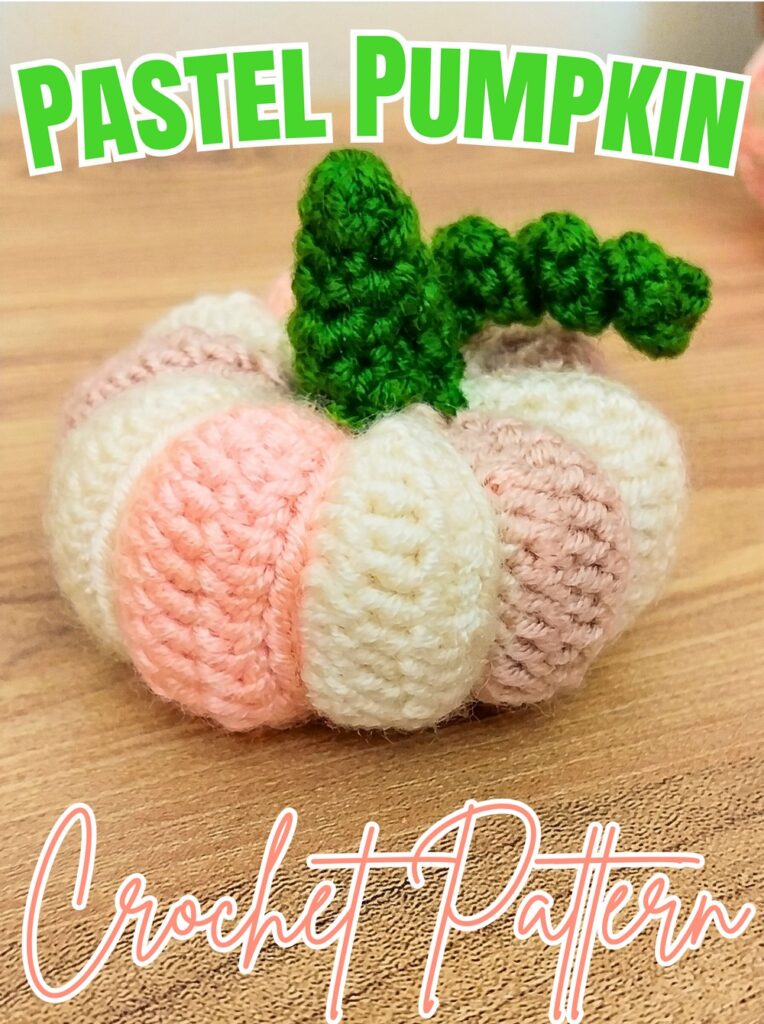
Pastel stripes give this crochet pumpkin a soft, modern look, while textured ribs create its familiar rounded shape. Working crochet flat in rows offers an approachable way to build pumpkin texture without shaping every round individually.
This crochet tutorial covers color changes, panel construction, stem and tendrils, stuffing, and yarn sculpting for defined pumpkin segments. Follow each stage to turn your striped panel into finished autumn decor.
Credit Crochet Patterns
Materials & Tools
- Yarn: Beige, white, light pink, and dark green yarn, matching pastel or autumn colors shown in your reference.
- Crochet Hook: Size suitable for your chosen yarn.
- Polyfill Stuffing: For filling and rounding out pumpkin body.
- Tapestry Needle: For seaming, cinching, sculpting ribs, and attaching foliage.
- Scissors: For cutting yarn and trimming ends.
Finished Size & Customization
This small amigurumi-style pumpkin works well as an autumn table accent, shelf decoration, or seasonal display. Finished dimensions depend on yarn thickness, hook size, and panel dimensions.
- Traditional autumn palette: Try orange, brown, and yellow.
- Pastel version: Combine beige, white, and light pink for a softer decorative style.
- Change body proportions: Adjust foundation-chain length to alter panel height, keeping in mind that a longer chain changes the body’s proportions.
Pattern Abbreviations
- ch: Chain
- sc: Single crochet
- hdc: Half double crochet
- st(s): Stitch(es)
Step-by-Step Crochet Pumpkin Instructions
Step 1: Create the Foundation Row
Begin with beige yarn to establish your pumpkin panel. This foundation determines panel height, so count carefully before working into your chain.
- Make 21 chains (21 ch).
- Starting back along chain, work 2 sc.
- Continue with 17 hdc.
- Finish with 2 sc.
This completes your foundation row.
Teaching tip: Keep your tension even along the chain. Tight foundation stitches can make later rows difficult to work, while loose stitches may leave uneven edges.
Stitch-count note: Your supplied instructions specify 2 sc, 17 hdc, and 2 sc after chain 21. These stitches total 21, so check your source for its intended starting-chain convention and placement before continuing.
Step 2: Build Striped Rows
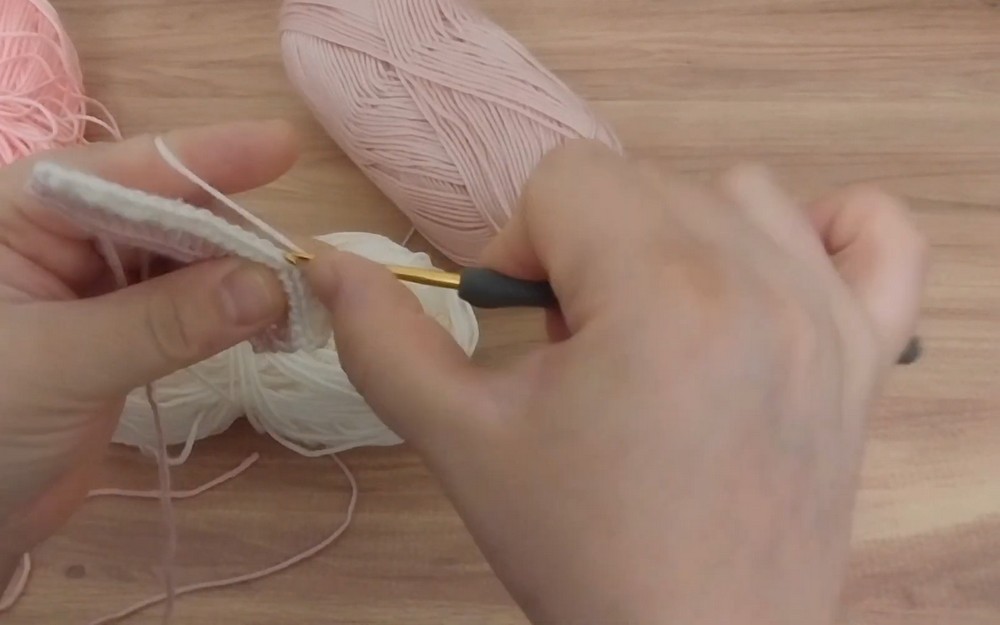
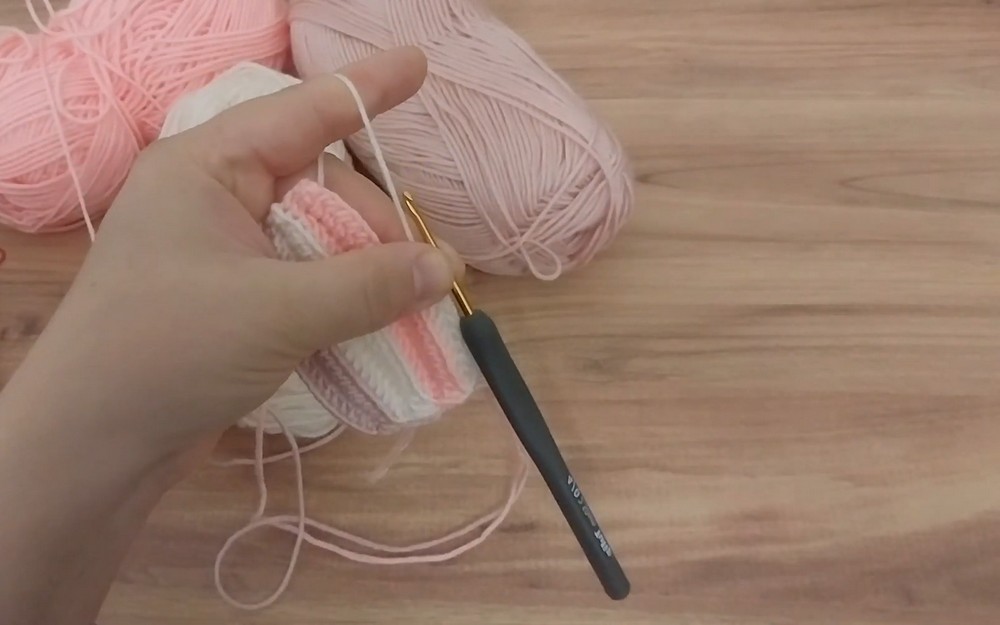
Once foundation row is complete, continue working back and forth to expand panel. Alternating colors create horizontal stripes on flat fabric that become vertical stripes when panel is assembled into a tube.
Use white, light pink, and beige or taupe for subsequent rows, following color order shown in your reference video.
- Work across each row using same stitch pattern established for panel.
- Change yarn color at row boundaries according to your chosen stripe sequence.
- Keep edges even so panel can be seamed neatly later.
- Continue until panel reaches desired width for your pumpkin.
Important pattern note: Supplied instructions do not specify exact row count, individual color-row sequence, or final panel dimensions. Follow reference video for those details rather than guessing repeat counts.
Result check: Finished panel should lie reasonably flat, with consistent stripes and a textured surface. Uneven edges may cause a crooked seam or irregular pumpkin shape.
Step 3: Form Ribbed Texture
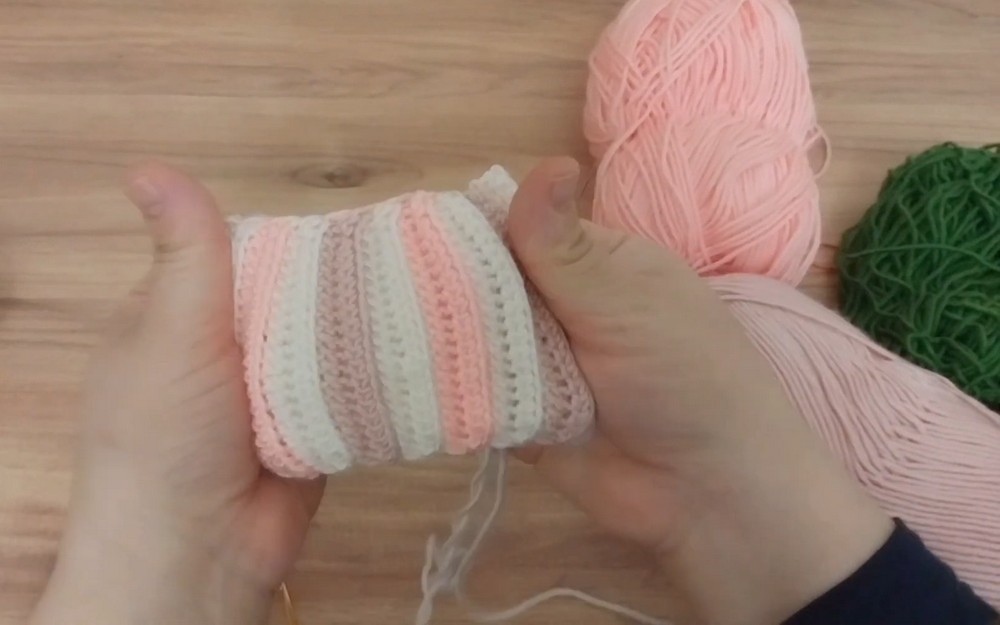
Ribbing gives pumpkin its segmented appearance. Maintain consistent stitch placement across rows so raised texture remains aligned.
As you work, compare neighboring rows to ensure stripe transitions and textured ridges remain visually balanced.
If you want more pronounced texture, keep stitch tension consistent instead of pulling some rows tighter than others. Final rib definition will also depend on yarn and stitch construction.
Step 4: Crochet Green Stem
Switch to dark green yarn for stem. A compact cylindrical shape provides an attachment point for leaves and tendrils.
- Create starting loop or base according to your source pattern.
- Work 5 sc in a round or spiral.
- Continue shaping stem according to reference instructions until it reaches desired length.
Teaching tip: Keep opening compact so stuffing or loose yarn does not show prominently when stem is attached.
Your supplied source does not include full stem-round instructions, so additional rounds should be taken from reference video rather than invented.
Step 5: Add Curly Tendrils and Leaves
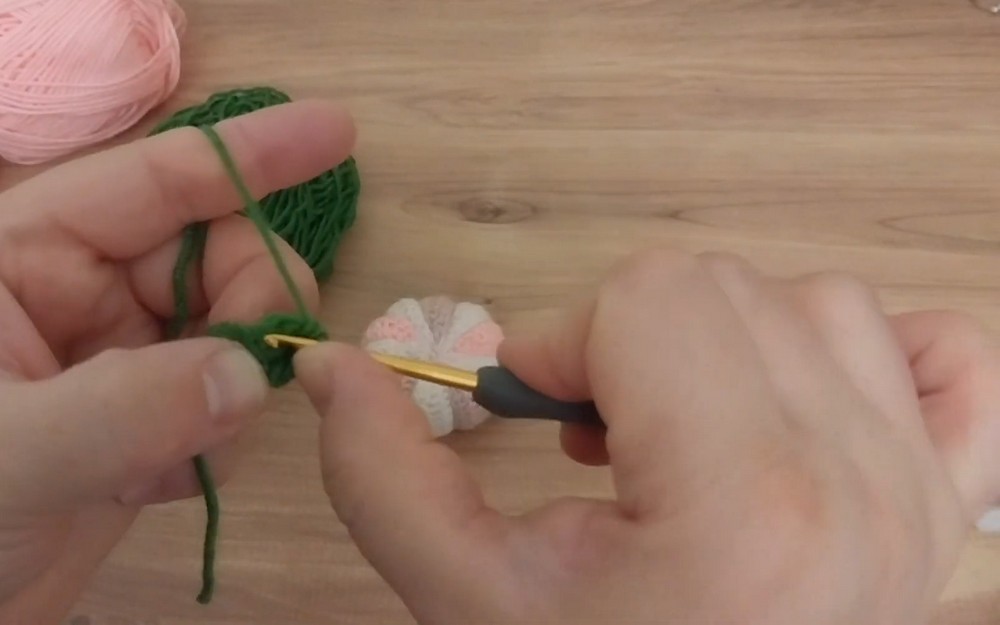
Use green yarn to create decorative chain loops and curly tendrils around stem.
Work chain-based accents following technique shown in your reference, then shape them gently with fingers before attaching them.
Result check: Tendrils should curl or loop naturally around stem without pulling its base out of shape. Prepare foliage before final assembly so you can arrange it neatly at pumpkin top.
Exact chain counts and leaf instructions were not included in supplied pattern notes, so use source video for their precise construction.
Step 6: Seam Panel into a Tube
Lay crocheted panel flat with short ends aligned. Bring those ends together and sew them using tapestry needle to form cylindrical tube.
Use small, even stitches along seam, matching corresponding rows where possible.
Helpful tip: Check stripe alignment before tightening seam. Matching color boundaries makes finished pumpkin look more intentional.
Once seam is secure, you should have an open-ended tube ready for shaping.
Step 7: Close Bottom Opening
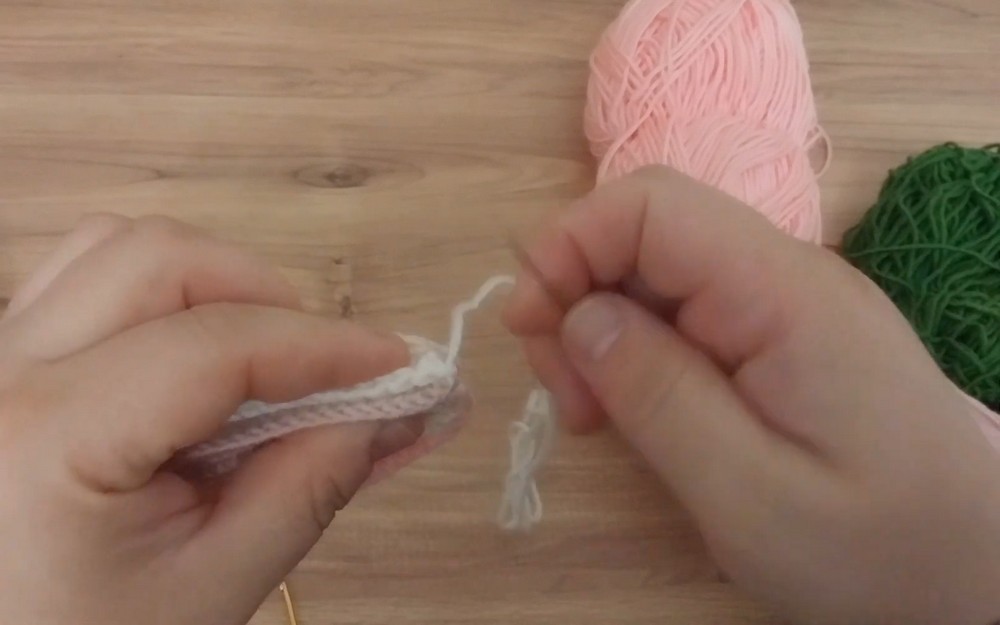
Thread yarn through stitches around bottom edge of tube. Pull yarn gradually to gather fabric and close base.
Secure gathered opening with a firm knot, keeping closure tight enough to prevent stuffing from escaping later.
Result check: Bottom should be closed securely, with no large gaps between gathered stitches. Keep remaining yarn accessible if it will be used during finishing.
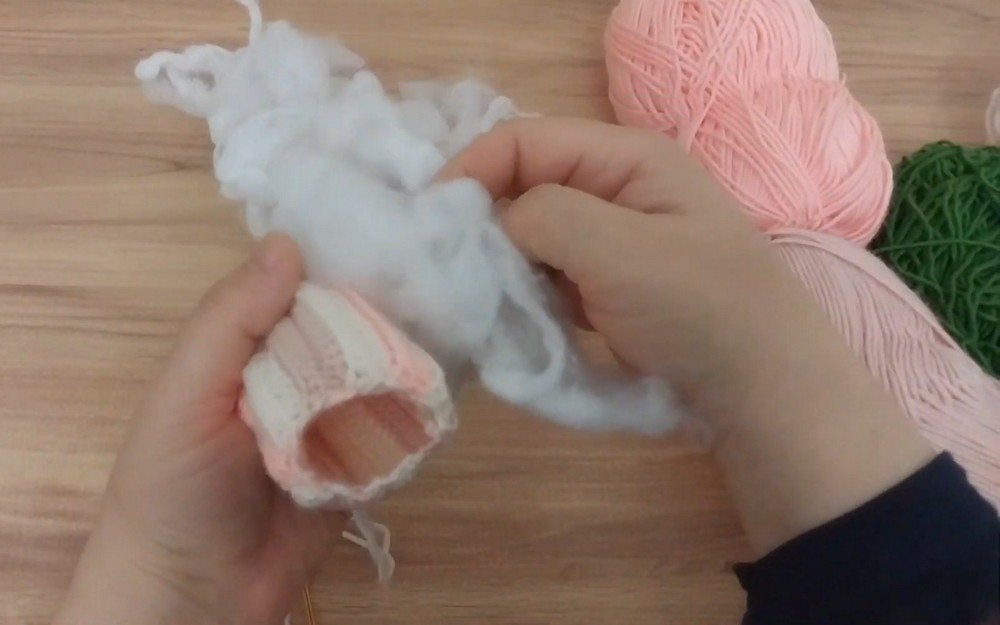
Step 8: Stuff Pumpkin Body
Turn tube so open end faces upward. Add polyfill through opening in small portions, distributing filling around body rather than packing one area heavily.
Continue until pumpkin feels full and rounded.
Teaching tip: Add stuffing gradually and smooth body with your hands as you work. Overfilling can stretch stitches and make it harder to define ribs in next stage.
Leave enough room near opening to gather top edge without forcing stuffing through stitches.
Step 9: Close Top Opening
Thread yarn through stitches around top edge and pull to gather opening, securing stuffing inside.
Adjust gathers evenly as you tighten so top does not lean noticeably to one side.
Secure yarn firmly before moving on to sculpting. Leave a usable yarn tail if your source technique uses it during shaping; otherwise, prepare a separate long strand for rib definition.
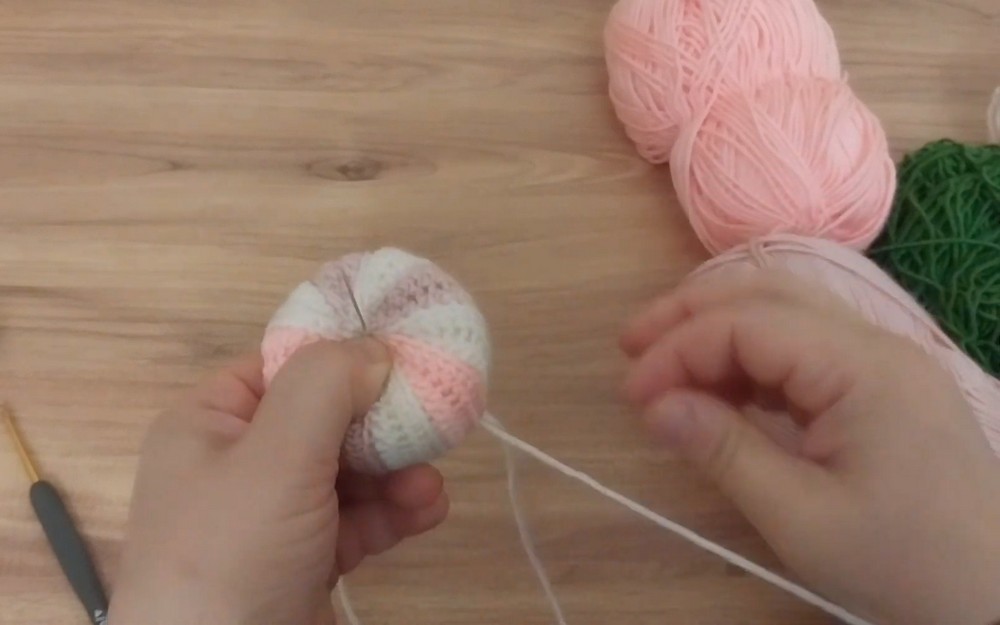
Step 10: Sculpt Pumpkin Segments
Use a long yarn strand and tapestry needle to define pumpkin ribs. This stage transforms rounded stuffed tube into segmented pumpkin shape.
- Pass needle and yarn vertically through center of pumpkin from bottom toward top.
- Bring yarn around exterior and position it in valley between two ribs.
- Pull gently to indent body and define one segment.
- Repeat around pumpkin perimeter at evenly spaced intervals.
- Secure yarn and weave in loose ends once segments look balanced.
Teaching tip: Apply tension gradually. Pulling too hard in one place can distort pumpkin or create uneven indentations.
Result check: Pumpkin should have distinct, rounded sections with valleys running from top to bottom. Adjust tension where needed before securing final ends.
Step 11: Attach Stem and Foliage
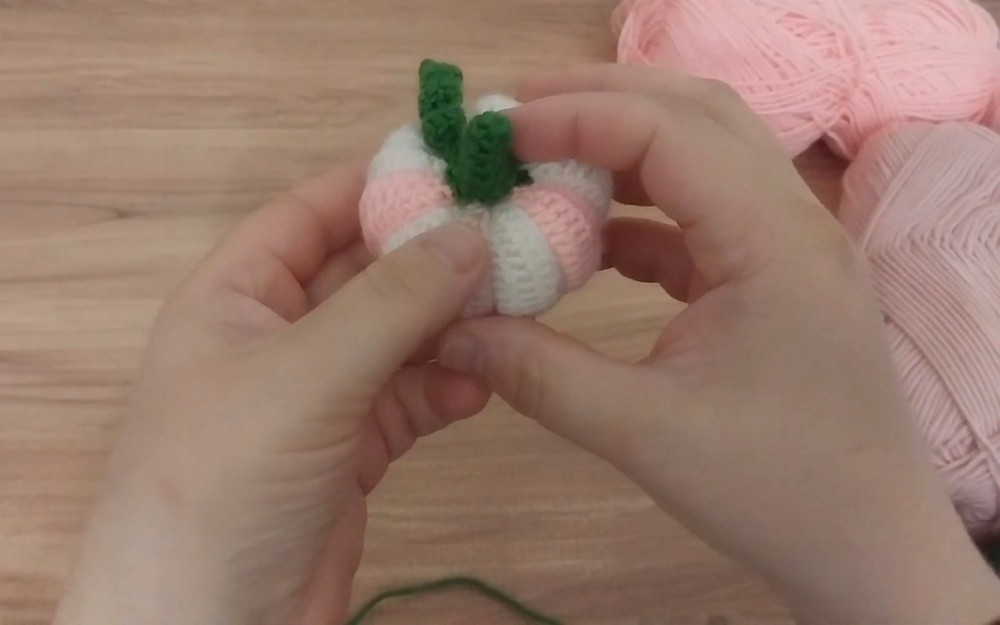
Position green stem at center of gathered top. Arrange leaves and curly tendrils around it before sewing, checking placement from multiple sides.
Use tapestry needle and yarn tails to attach stem securely. Sew foliage in place where necessary, keeping decorative loops visible rather than trapping them under stitches.
Final placement check: Stem should sit upright, while leaves and tendrils spread naturally across top. Adjust their positions before weaving in remaining yarn.
Finishing Touches
Weave in any remaining loose ends and gently reshape pumpkin with your hands. Smooth its surface, balance rib spacing, and arrange tendrils for a finished seasonal display.
Your pastel crochet pumpkin is ready to decorate an autumn table, shelf, or cozy seasonal corner. Try traditional fall colors or another pastel combination to create a collection of pumpkins in different shades and proportions.