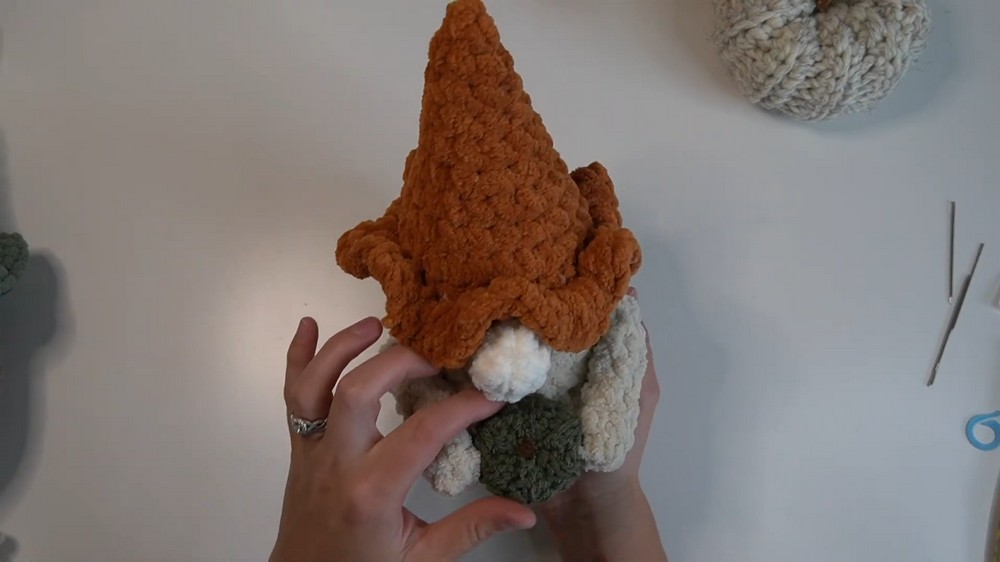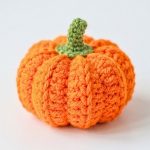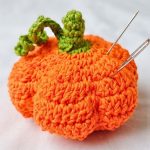
Looking for cozy fall decor with handmade charm? This crochet gnome features a floppy pointed hat, a soft beard-style nose area, and a tiny pumpkin to hold.
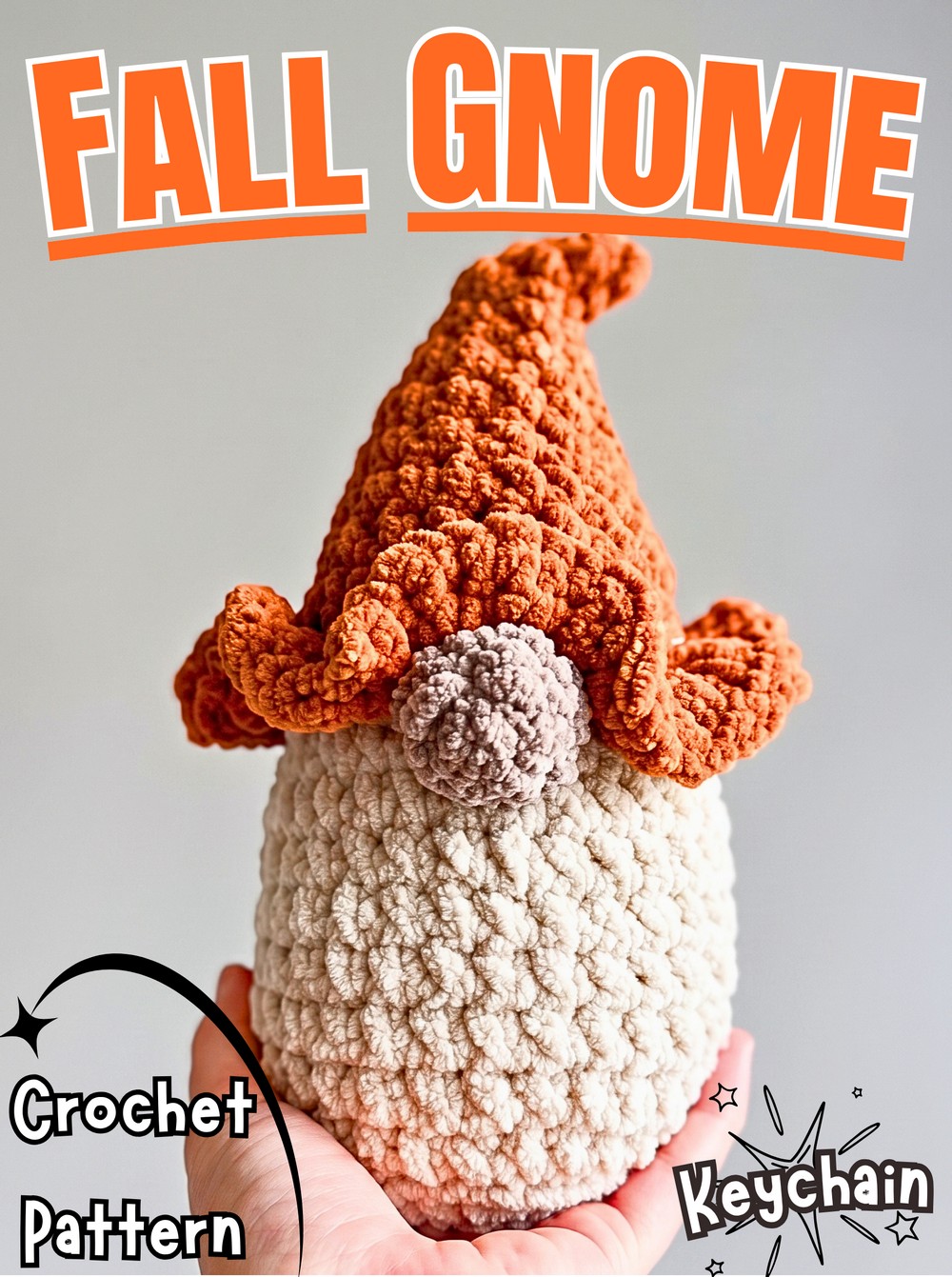
Handmade characters feel extra special when they bring warmth to a shelf, mantel, or seasonal display. This crochet gnome has a rounded, plush body, a tall pointed hat with a floppy brim, and a little pumpkin held in front, making it a charming addition to fall decorations. Chenille yarn gives the finished gnome a soft, cuddly look without complicated colorwork.
This crochet tutorial lets you make the body, hat, brim, nose, pumpkin, and arms one part at a time. The main crochet gnome uses super-bulky yarn, while the smaller pumpkin is made with worsted-weight yarn and a smaller hook. The instructions also explain how to shape the hat into a crooked style and securely attach the pumpkin, so you can create a finished decoration in your own color choices.
Credit: Back to Eden Crochet
What Is a Fall Gnome?
Fall gnomes are small decorative characters often styled with long pointed hats, rounded bodies, and warm autumn colors. They fit beautifully into seasonal displays alongside pumpkins, leaves, pinecones, and other fall accents.
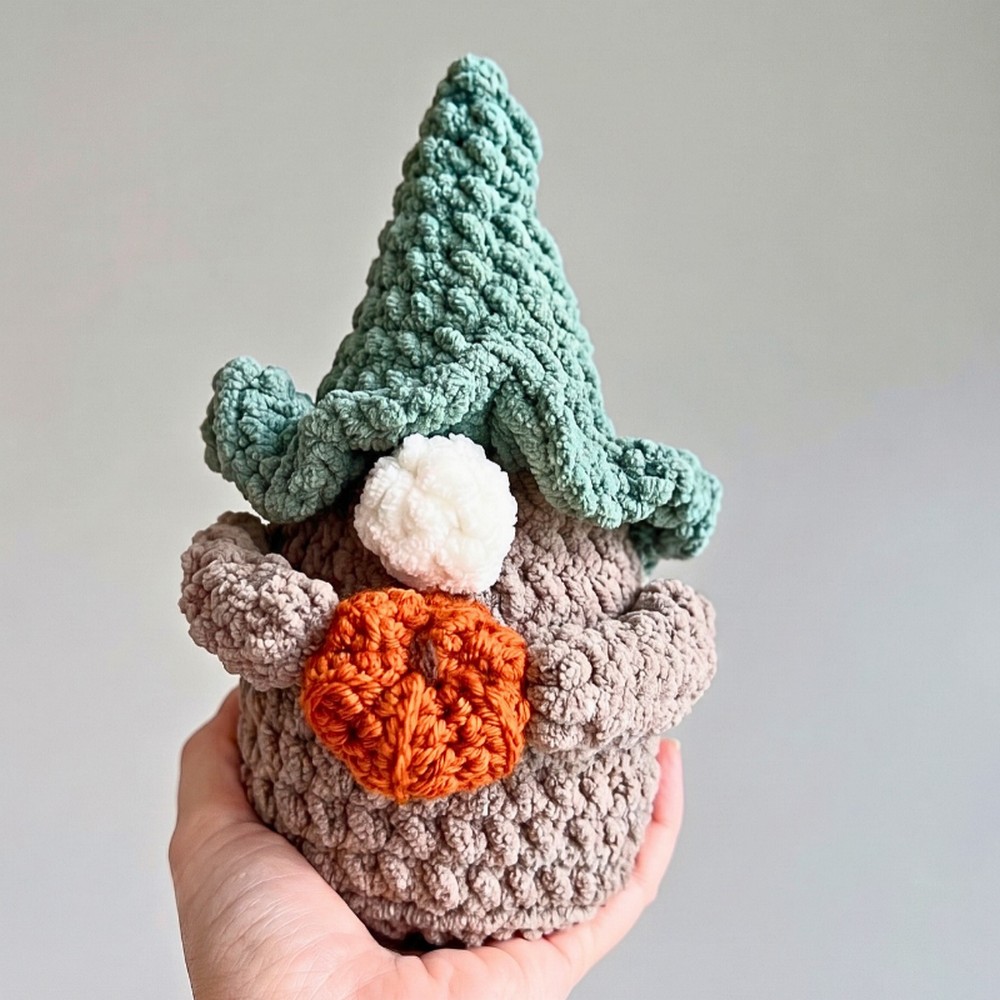
In this design, the gnome has a soft, rounded body and a tall hat that stays straight or bends into a playful curve. A small crocheted pumpkin sits between the arms, giving the character a clear autumn theme. You can change the yarn colors to create different looks, including a green-bodied gnome with a dark hat for a Halloween-inspired decoration.
Materials and Tools Needed
Yarn
- Body: Bernat Blanket yarn in Vintage White, super bulky weight 6.
- Nose: Bernat Baby Blanket yarn in Baby Sand, super bulky weight 6.
- Hat and brim: Chenille Home Slim by Loops & Threads in Mustard, super bulky weight 6.
- Arms: Bernat Blanket yarn in Almond, super bulky weight 6.
- Pumpkin: Small amounts of orange or pumpkin-colored worsted-weight yarn.
- Pumpkin stem: A small amount of brown worsted-weight yarn.
- Optional green yarn: For attaching the pumpkin to the arms, as described in the tutorial.
Crochet Hooks and Notions
- 7 mm crochet hook for the body, hat, nose, and arms.
- 4 mm crochet hook for the pumpkin.
- Stitch marker.
- Tapestry needle.
- Scissors.
- Polyfill stuffing.
- Optional small weight, such as rice or beans, for extra stability if needed.
Helpful note: Chenille and plush yarn can make individual stitches difficult to see. Feel the top of each stitch with your fingers and use a stitch marker to identify the beginning of every round.
Finished Size and Customization Ideas
The supplied instructions do not include exact finished measurements, so the finished height and width will depend on your yarn, hook, tension, and how you shape the hat.
You can personalize the gnome in several ways:
- Straight hat: Leave the pointed hat upright for a classic gnome appearance.
- Crooked hat: Keep the upper portion flexible and bend it to one side.
- With or without arms: Make the arms when you want the gnome to hold the pumpkin, or leave them off for a simpler decoration.
- Different colors: Swap the body, hat, nose, and arm colors to suit your fall display.
- Different accessories: The pumpkin-holding idea can inspire future seasonal versions featuring another small handmade item, provided its size and attachment method suit the gnome.
Pattern Abbreviations and Stitches
US crochet terminology is used throughout.
- st(s): Stitch(es)
- ch: Chain
- sc: Single crochet
- hdc: Half double crochet
- inc: Increase – work 2 single crochets in the same stitch
- dec: Decrease
- inv dec: Invisible decrease – insert the hook through the front loop only of the first stitch, then through the front loop only of the second stitch. Yarn over and pull through both front loops, then yarn over and pull through the remaining loops to complete the single crochet.
- BLO: Back loop only
- FLO: Front loop only
- sl st: Slip stitch
- Rnd: Round
- Row: Row
Step-by-Step Crochet Gnome Pattern
Make the gnome in separate sections before attaching the pumpkin and arms. Work the body first, continue into the pointed hat, then make the brim, nose, pumpkin, and arms.
The body and hat are worked in continuous rounds unless a step says otherwise. Do not join or turn at the end of each round, and move the stitch marker into the first stitch of every new round.
Part A: The Gnome Body
Rnd 1: Using Vintage White yarn and the 7 mm hook, make a magic circle. Work 6 sc into the circle, then pull the yarn tail to close the center. (6 sts)
Keep the center tight enough to prevent a hole. If the magic circle is difficult to manage with plush yarn, hold the stitches gently so they do not slide off the hook.
Rnd 2: Work 1 sc inc in every stitch around. (12 sts)
Each stitch from the previous round receives 2 sc. Mark the first stitch before moving on.
Rnd 3: Work 1 sc inc in every stitch around. (24 sts)
This round doubles the stitch count again. Check that you have 24 stitches before beginning the next round.
Rnd 4: Repeat sc 3, sc inc around. (30 sts)
Work 1 sc in each of the next 3 stitches, then place 2 sc in the following stitch. Repeat that sequence around the round. The increases widen the base while keeping the shape rounded.
Rnd 5: Working in the BLO only, sc in every stitch around. (30 sts)
Insert the hook through the back loop of each stitch rather than both loops. This leaves a visible ridge that helps define the transition between the base and the body.
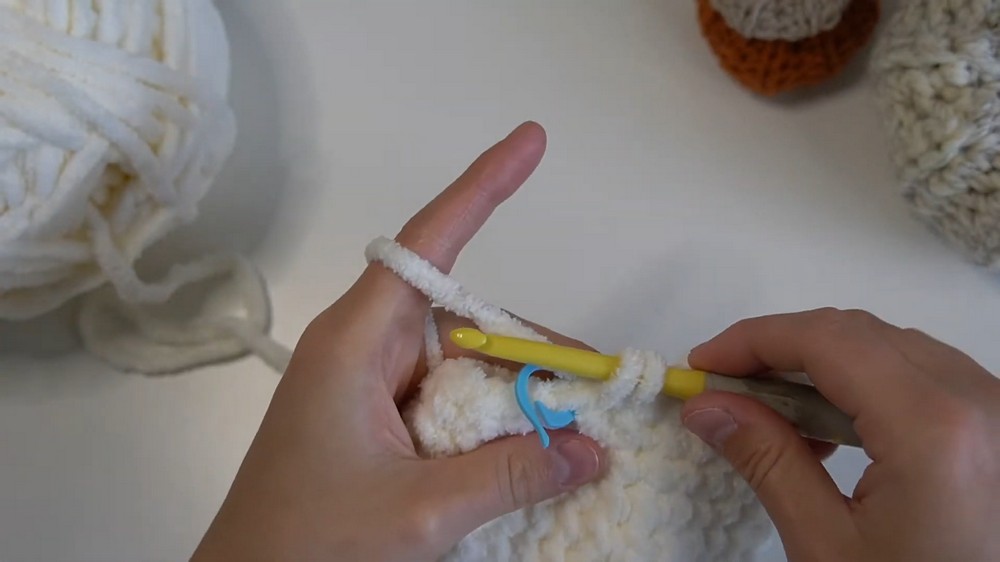
Rnds 6-11: Work 1 sc in every stitch around through both loops. (30 sts per round)
Continue straight without increasing. Count your stitches periodically, especially with thick yarn, because the stitch tops can be hard to distinguish.
Rnd 12: Repeat sc 3, inv dec around. (24 sts)
Work 1 sc in each of the next 3 stitches, then make 1 invisible decrease over the next 2 stitches. Repeat around to reduce the body opening.
Rnd 13: Work 1 sc in every stitch around. (24 sts)
Keep the sides even and check that you still have 24 stitches. In the next round, switch to the hat color.
Changing to the hat color: On the final stitch of Rnd 13, insert the hook into the stitch and yarn over with the body yarn to pull up a loop. Drop the body yarn, pick up the mustard hat yarn, and pull it through the loops on the hook to complete the stitch. Trim the old body yarn tail as directed in the supplied instructions.
This color-change method helps the new shade begin neatly. Avoid pulling the new yarn too tightly, or the top edge may pucker.
Part B: The Pointed Hat and Brim
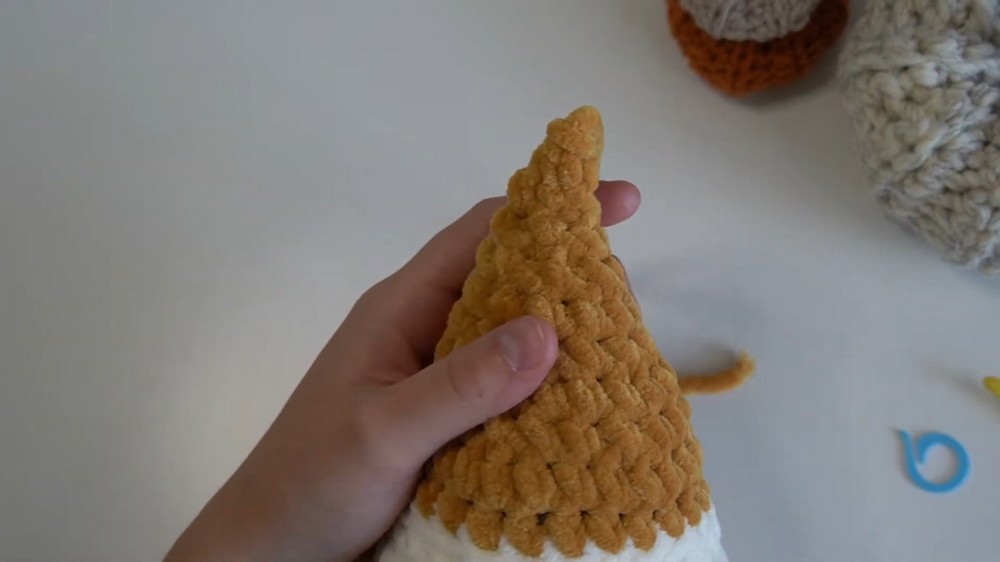
Forming the Pointed Hat
Rnd 14: With mustard yarn, work 1 sc in the BLO of every stitch around. (24 sts)
The unused front loops will be used later to crochet the brim. Keep those loops visible and avoid catching them accidentally.
Secure the inner yarn tails: Tie the starting hat-color tail and body-color tail together three times on the inside, then tuck them into the body as directed. Keep the knots secure without pulling the color-change area out of shape.
Rnd 15: Work 1 sc in every stitch around through both loops. (24 sts)
This begins the upper part of the hat. Keep your tension even so the hat rises smoothly from the body.
Rnd 16: Repeat sc 2, inv dec around. (18 sts)
Begin filling the body firmly with polyfill at this point, then continue adding stuffing as you work. Push small amounts into the lower body rather than one large clump, which can create lumps.
Rnd 17: Work 1 sc in every stitch around. (18 sts)
Keep the stitch count steady, and make sure the stuffing stays evenly distributed.
Rnd 18: Repeat sc 1, inv dec around. (12 sts)
The opening narrows as the hat tapers. Add more stuffing if needed, but leave the upper section flexible if you want to shape it into a crooked hat.
Rnd 19: Work 1 sc in every stitch around. (12 sts)
Work evenly without increasing or decreasing.
Rnd 20: Repeat sc 1, inv dec around. (8 sts)
The hat becomes narrower toward the tip. Check the stitches carefully because the smaller opening may be harder to see through the plush fibers.
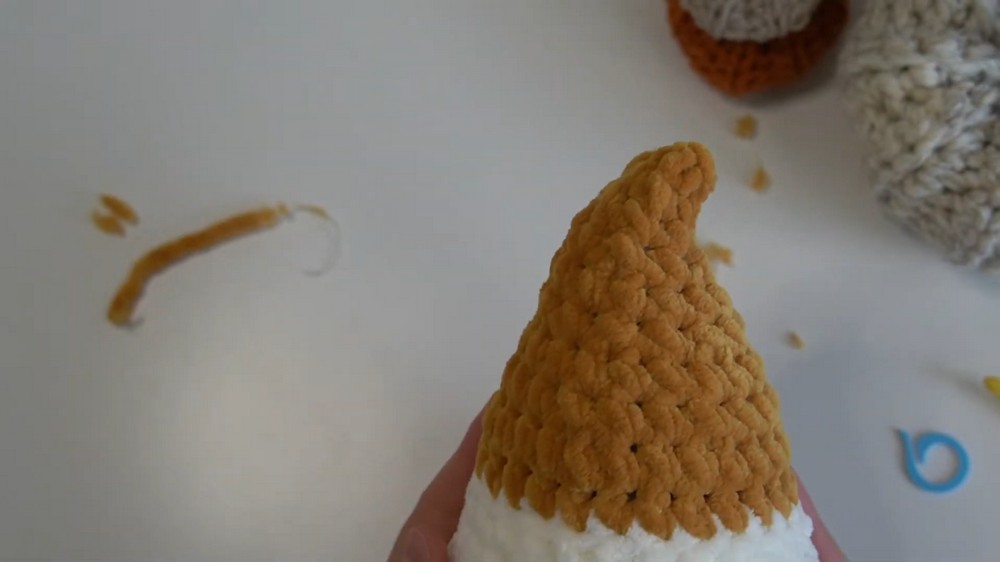
Rnd 21 – Pattern count check: The supplied instructions say to repeat sc 2, inv dec around and give a final count of 6 stitches. However, this sequence does not divide evenly into the 8 stitches remaining after Rnd 20. The repeat and stated stitch count therefore need confirmation from the original video or pattern source. Do not force the sequence or add an unprovided stitch to make it fit.
Rnd 22: The supplied instructions say to work 1 sc in every stitch around, with 6 sts.
This count depends on resolving Rnd 21 first. Confirm the stitch count before continuing.
Rnd 23: The supplied instructions say to repeat sc 1, inv dec around, ending with 4 sts.
Again, follow this round only after verifying the preceding round, since its starting count depends on the unresolved Rnd 21 sequence.
Fasten off, leaving a tail for weaving in. Secure the yarn without pulling the hat tip out of shape.
Shaping a Crooked Hat
For a straight hat, leave the pointed section upright. For the crooked version, keep the upper portion unstuffed or lightly stuffed so it stays flexible. Bend the tip to one side and use the yarn tail to make small whip stitches that hold the curve in place.
Try the bend before securing it permanently. A gentle curve gives the hat a relaxed fall-season look, while a sharper bend creates a more playful silhouette.
Crocheting the Floppy Hat Brim
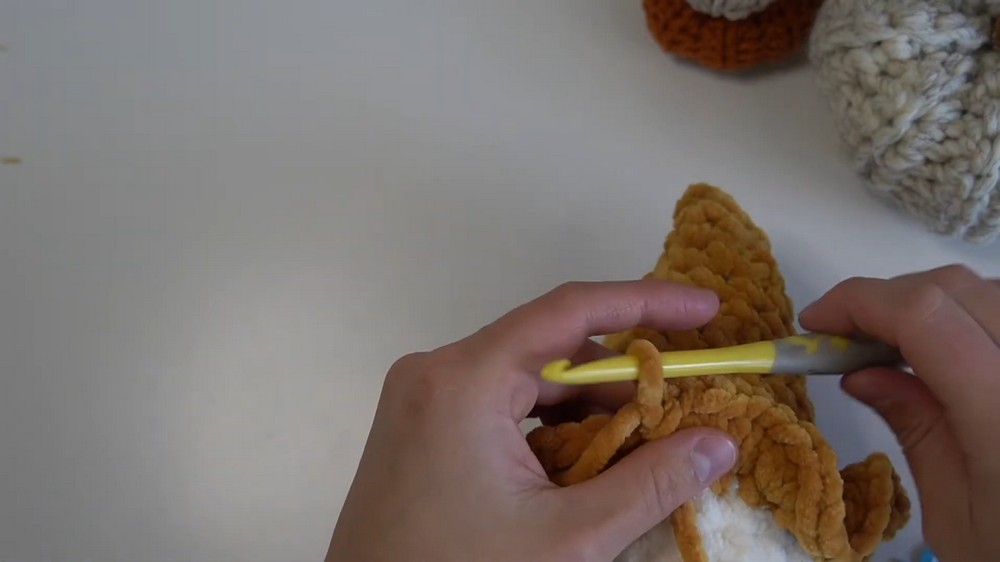
With the gnome facing away from you, attach mustard yarn to the first available front loop left from Rnd 14 at the back of the gnome.
Brim Rnd 1: Ch 1; this chain does not count as a stitch. Work 1 sc into each available front loop around. (24 sts)
Check that the brim attachment runs all the way around the hat base. If you miss a front loop, a small gap may appear.
Brim Rnd 2: Work 3 hdc in every stitch around in continuous rounds. (72 hdc total)
The three hdc in each stitch create the wide, floppy edge. Because this round increases quickly, the brim should spread outward rather than sit flat against the body.
Finish: Slip stitch into the stitch marked by the stitch marker. Ch 1, cut the yarn, leaving a tail, and pull it through to secure. Use the starting tail to whip-stitch any small gap at the join, then weave in the loose ends.
Part C: The Nose
Rnd 1: With Baby Sand yarn and the 7 mm hook, make a magic circle and work 6 sc into it. Pull the circle tight. (6 sts)
Rnd 2: Repeat sc 2, sc inc twice. (8 sts)
Work 1 sc in each of the next 2 stitches, then place 2 sc in the next stitch. Repeat that sequence once more.
Rnd 3: Repeat sc 2, inv dec twice. (6 sts)
This reduces the small piece to form a rounded nose. Keep the decreases neat so the stuffing will not show through.
Sl st into the next stitch, then fasten off, leaving a long sewing tail. Add a tiny pinch of polyfill to give the nose a rounded shape.
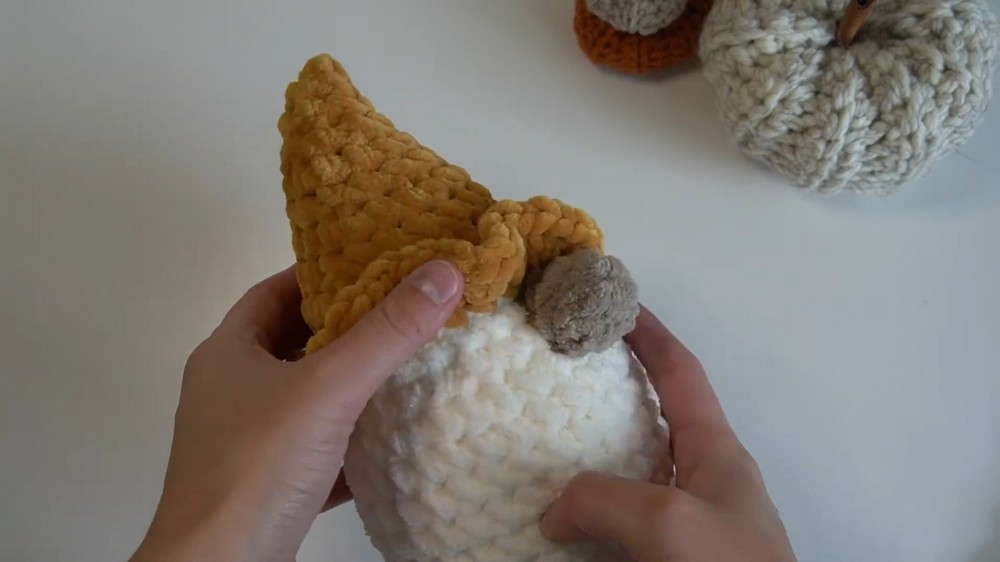
Attaching the nose: Position the nose at the center front of the gnome, directly underneath the hat brim. Use a tapestry needle and the long tail to whip-stitch it securely to the body. Weave the remaining tail inside the body and trim it.
Before finishing the seam, check that the nose sits centered and isn’t completely hidden beneath the brim.
Part D: The Mini Pumpkin
Make the pumpkin separately from a small ribbed panel, then gather both ends to create its rounded shape. Use the 4 mm hook and orange worsted-weight yarn.
Foundation: Ch 9.
Row 1: Starting in the second chain from the hook, work sc 2, hdc 4, then sc 2 in the final two chains. Ch 1 and turn. (8 sts)
Count the stitches before turning. The row should have 8 stitches in total.
Rows 2-12: Working in the BLO only, work sc 2, hdc 4, sc 2. Ch 1 and turn at the end of each row. (8 sts per row)
Continue until you have completed 12 rows. The back-loop stitches create ridges that give the pumpkin a ribbed texture. The supplied counting tip is to look for 6 distinct ridges, with each ridge representing 2 rows.
Shaping the Pumpkin
- Gather the bottom edge. Thread a long orange yarn tail onto the tapestry needle. Weave it in and out along the bottom edge, roughly every other row, then pull it tight to close the opening. Anchor the center with a stitch.
- Close the side seam. Whip-stitch the two side edges together through the back loops to form a small cylinder or pouch.
- Add stuffing. Fill the pumpkin lightly with polyfill so it stays soft and squishable, not overly firm.
- Gather the top. Work another gathering stitch around the top edge and pull it closed.
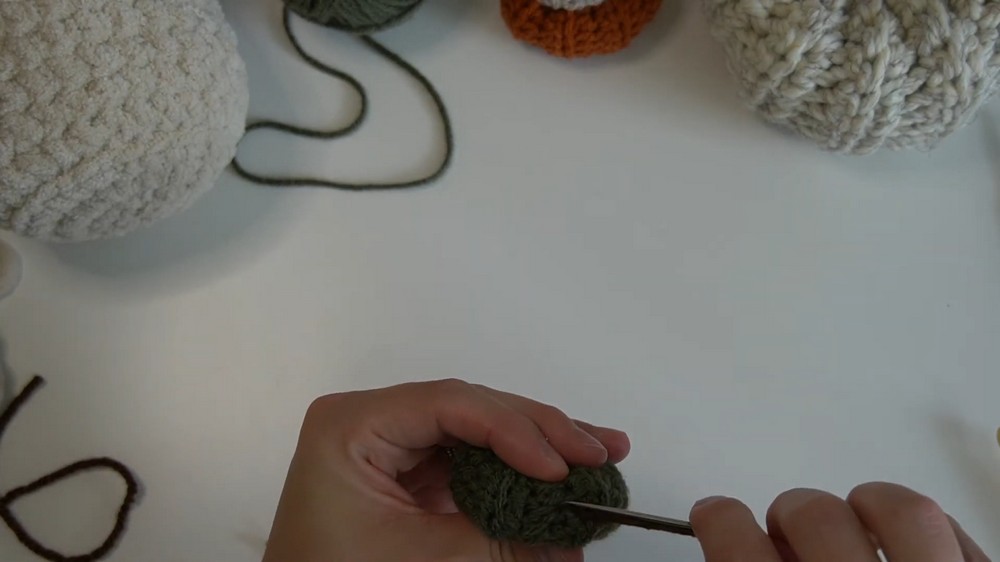
- Create the pumpkin lobes. Pass the needle straight through the center from top to bottom three or four times, pulling each time firmly to create the indented, segmented shape. Secure the yarn with a knot and bury the tail inside.
Take care not to pull so hard that the yarn breaks or the fabric bunches unevenly. Small, even pulls help the pumpkin stay rounded.
Adding the Pumpkin Stem
Using brown worsted-weight yarn and a tapestry needle, embroider a small stem at the top by working several vertical whip stitches into the same central opening. Tie a secure knot inside the pumpkin fibers and trim the ends.
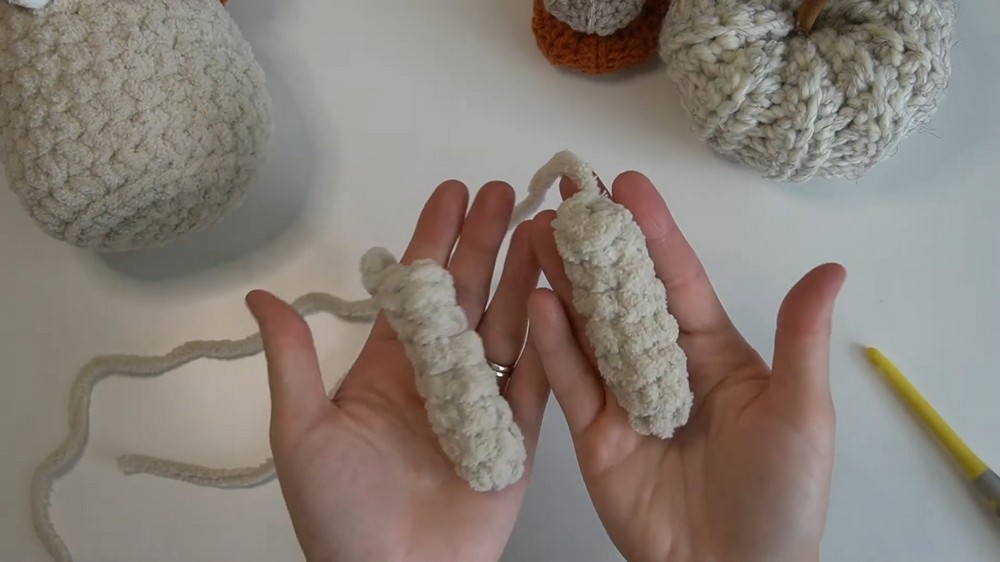
Part E: The Arms
Make two arms using Almond yarn and the 7 mm hook.
Rnd 1: Make a magic circle and work 5 sc into it. (5 sts)
Rnds 2-7: Work 1 sc in every stitch around for six rounds. (5 sts per round)
Keep the arms narrow and even. The supplied pattern gives 30 single crochet stitches across these six rounds, plus the first round.
Sl st into the next stitch and fasten off, leaving a tail for sewing. Make the second arm in the same way.
Assembly: Putting the Gnome Together
Before sewing, lay out the body, nose, pumpkin, and two arms to check their positions. The hat should sit neatly over the rounded body, with enough space underneath the brim for the nose.
- Attach the nose. If you haven’t already, center it just below the brim and sew it securely in place.
- Position the pumpkin. Hold the finished pumpkin against the gnome’s front so the arms can reach its sides.
- Join the arms to the pumpkin. Use green yarn and a few secure whip stitches to attach the hands to the sides of the pumpkin, following the supplied instructions.
- Position the arms. Place the assembled arms-and-pumpkin unit across the front of the gnome, approximately spanning Rnds 6–7 below the hat color change.
- Sew the arms to the body. Use the arm yarn tails to whip-stitch both arms firmly to the body. Check that the pumpkin sits naturally between them and does not tilt too far to one side.
- Finish the yarn ends. Weave the remaining tails into the plush stitches and trim them carefully.
If the gnome needs more stability, the supplied materials list allows for an optional small weight. Make sure any added weight is enclosed securely and cannot escape through the stitches.
Tips for Working with Plush Yarn
- Use a stitch marker every round. Chenille fibers can hide stitch tops, so a marker helps you keep track of the first stitch.
- Count before starting an increase or decrease round. This is especially important for Rnd 21 of the hat, where the supplied repeat does not match the stated starting count.
- Feel for stitch tops. Run a finger along the round to locate the small V-shaped stitch tops before inserting your hook.
- Stuff in small amounts. Add polyfill gradually to avoid lumps and keep the body rounded.
- Avoid pulling the yarn too tightly. Tight stitches are hard to see and work into with super-bulky chenille yarn.
- Keep the hat tip flexible for a crooked shape. Leave the top unstuffed or lightly stuffed so it can bend without forcing the stitches.
Fall Display and Gifting Ideas
Place the finished gnome beside a small pumpkin, on an autumn shelf, or among seasonal decorations on a mantel. Its soft texture works well with wood, dried leaves, and other cozy fall accents.
The color combination can also be changed for different occasions. Mustard and warm neutrals create an autumn feel, while darker shades can give the gnome a Halloween-inspired appearance. If you want to make a pair, use the same body and pumpkin instructions but change the hat and body colors; the supplied pattern does not include a separate full stitch sequence for a second color variation.