Want a quick fall crochet decoration? This ribbed pumpkin takes about 30 minutes and uses simple shaping, firm stuffing, and yarn-drawn grooves for its plump look.
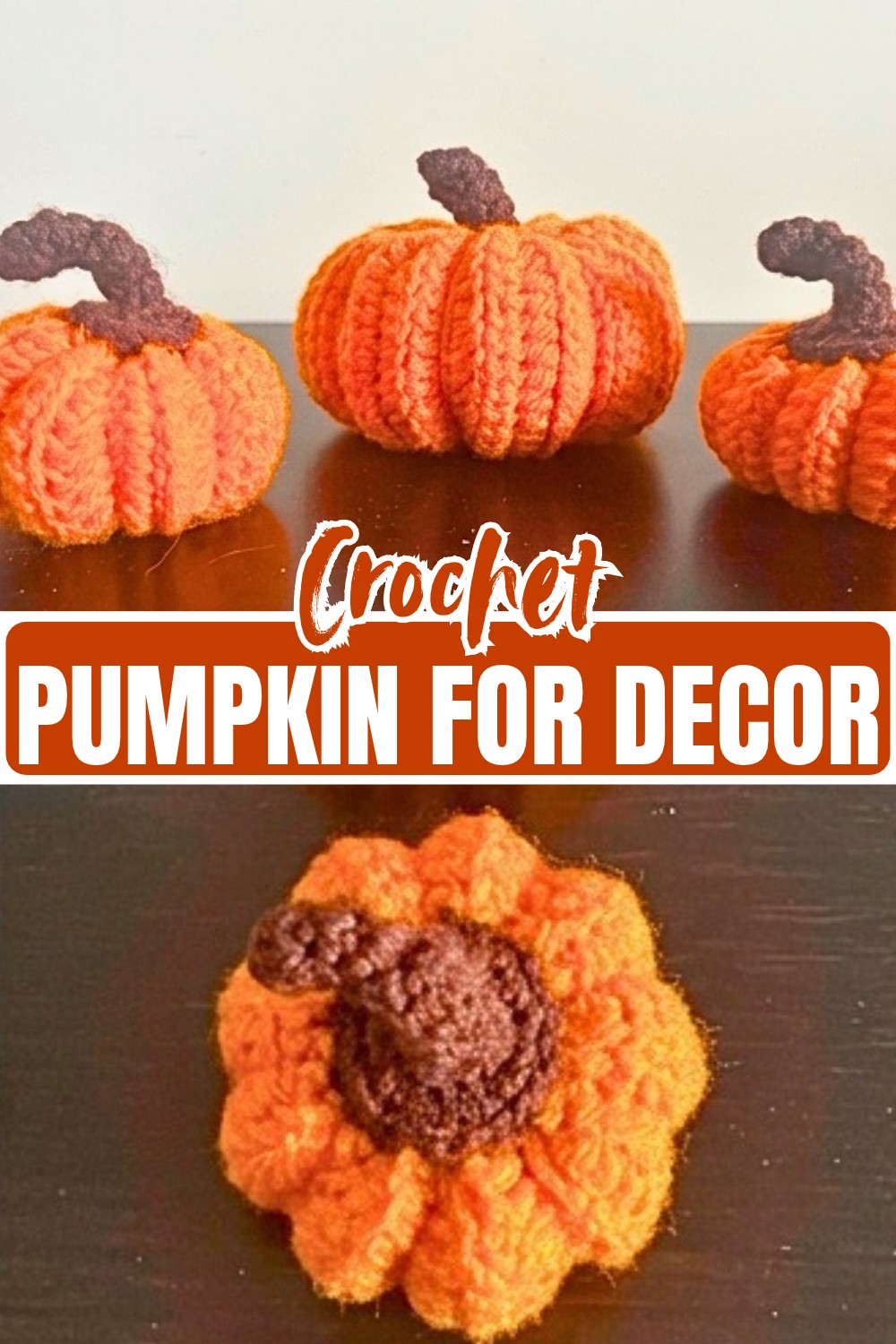
A soft, ribbed crochet pumpkin is an easy way to bring handmade texture to fall decorating without needing a complicated pattern. The body starts as a simple rectangular panel, but once it is joined, stuffed, and cinched, those raised ridges give it the rounded look of a classic crochet pumpkin.
The real finishing detail comes from the long yarn tail used to draw the pumpkin into nine sections. In this tutorial, you’ll see how to make the ribbed body, close and shape it, create the grooves evenly, and attach a neat crocheted stem. You can also adjust the proportions to make a taller, wider, or differently colored pumpkin.
Credit NeatKnot
Materials and Tools
- Yarn: Loops & Threads 100% Acrylic, Medium/Worsted weight
- Main color for the pumpkin, such as orange or white
- Contrast color for the stem, such as brown or green
- 5.0 mm (H) crochet hook for the pumpkin body
- 4.0 mm (G) crochet hook for the stem
- Tapestry needle
- Scissors
- Poly-fil or your preferred stuffing
Hook note: The tutorial mentions a 5.5 mm hook initially, but the pumpkin body is worked with a 5.0 mm hook. The stem uses a 4.0 mm hook.
Pattern Abbreviations
US crochet terms are used throughout.
- ch: Chain
- st(s): Stitch(es)
- sl st: Slip stitch
- sc: Single crochet
- hdc: Half double crochet
- inc: Increase – 2 single crochets in the same stitch
- BLO: Back Loop Only
- MR: Magic Ring

Crochet the Ribbed Pumpkin Body
The pumpkin begins with a short chain and repeated hdc rows. Working almost every row in the back loop creates the vertical ribbing that will eventually become the pumpkin’s natural-looking sections.
Use your main pumpkin color and the 5.0 mm hook.
Row 1: Ch 15. Skip the first ch from the hook and work 1 hdc in each ch across. (14 sts)
Row 2: Ch 1, turn. Work 1 hdc in the BLO of each st across, except the very last stitch. In the final st, work a standard hdc under both loops for a cleaner edge. (14 sts)
Rows 3-18: Repeat Row 2. (14 sts each row; 18 rows total)
The repeated BLO stitches create a flexible, ridged panel. Keep the final stitches of each row worked as instructed, since the regular hdc at the edge helps keep the sides more even when you join the panel.

Join the Two Short Ends
Lay the panel flat and fold it in half so Row 1 meets Row 18. You are now turning the flat ribbed piece into a tube.
Working across the joined edges, insert your hook through the BLO of the panel closest to you and the corresponding loops of the back panel. Slip stitch the two edges together across all 14 stitches.
Fasten off, but leave a very long yarn tail.
Do not trim this tail short. It will be used later to close the pumpkin and pull the finished body into its characteristic sections.

Make the Crocheted Stem
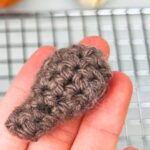
The stem is worked separately in brown or another contrasting color with the 4.0 mm hook. It begins very narrow and gradually widens at the top so it can sit securely over the center of the pumpkin.
Round 1: Make a MR, ch 1, work 4 sc into the ring. Pull the ring tight to close. Sl st to the first st to join. (4 sts)
Round 2: Ch 1, sc in each st around. Sl st to join. (4 sts)
Rounds 3–10: Repeat Round 2 until the stem reaches your desired length. (4 sts each round)
Round 11: Ch 1, (1 sc in the next st, inc in the next st). Repeat around. (6 sts)
Round 12: Ch 1, inc in each st around. (12 sts)
Fasten off, leaving a long tail for sewing.

Shape the Pumpkin
Before adding the stem, the body needs to be closed, stuffed, and shaped. This is where the flat ribbed tube becomes recognizable as a pumpkin.
Close the Bottom First
Thread the long pumpkin-body tail onto your tapestry needle.
Weave the needle in and out around the bottom edge of the tube, passing through the ends of the rows. Once you have worked around the entire opening, pull the yarn firmly.
The opening should gather toward the center. Sew a few stitches across the cinched area to hold it securely.
Turn and Stuff Firmly
Turn the pumpkin inside out so the seam and the closed bottom are hidden on the inside.
Now add your stuffing. For this particular shape, firm stuffing gives the best result. Continue filling until the pumpkin feels quite firm rather than soft and floppy.
A well-filled body gives the yarn grooves something solid to press against when you shape the sections.
Close the Top
Once the pumpkin is firmly stuffed, thread the same long tail around the top opening, weaving in and out along the edge.
Pull the yarn to gather the opening tightly over the stuffing. Sew a few stitches across the center to keep the closure secure.
Keep the yarn attached. You will use this same tail to create the pumpkin’s grooves.

Pull in the Pumpkin Grooves
The ribbed rows already provide natural lines to follow, so you do not need to guess where each section should go.
Insert the tapestry needle through the top center hole and bring it down through the bottom center hole. Pull the yarn around the outside of the pumpkin and settle it into one of the natural grooves created by the hdc ribbing.
Take the needle back down through the top center and out through the bottom center. Pull firmly enough to compress the pumpkin and make that ridge more pronounced.
Continue around the pumpkin, following the ribbed lines and spacing each pull as evenly as possible.
Work until the pumpkin has 9 distinct sections.
Tie off the yarn securely and weave the remaining end into the pumpkin so it disappears inside.
A Simple Way to Keep the Sections Even
As you add each groove, look at the pumpkin from the top rather than only from the side. The center opening gives you a useful visual reference: each yarn pull should spread outward from the same center area. If one section looks noticeably wider than its neighbors, loosen that pull before moving on.
Sew the Stem in Place
The stem is attached directly over the top center of the pumpkin.
Thread the long stem tail onto your tapestry needle and position the stem over the center hole.
Work around the base of the stem, taking the needle through the stitches of Round 12 and catching the pumpkin body underneath. Continue all the way around so the stem is firmly secured.
Fasten off and hide the yarn tail inside the pumpkin. Snip away any excess once the end is safely tucked inside.
Change the Pumpkin’s Size or Style
Once you understand how the rectangular body controls the finished shape, it is easy to make a small collection of pumpkins with different proportions.
- For a taller pumpkin: Start with a longer foundation chain, such as 20, 23, or 25 chains.
- For a wider pumpkin: Add more rows instead of stopping at Row 18. Working 25 or more rows will give you a wider panel.
- For a classic fall look: Try orange yarn with a brown stem.
- For a softer farmhouse style: Use white yarn with a green stem.
- For a mixed fall display: Make several pumpkins in different heights and colors.
The important thing to remember is that the starting chain controls the height of the panel, while the number of rows affects how much width you create before joining and shaping it.
Finish Your Fall Pumpkin
Once the stem is secure and the yarn ends are hidden, give the pumpkin a final gentle adjustment with your hands. Check that the nine sections are sitting evenly and that the stem is centered.
The combination of the ribbed hdc fabric, firm stuffing, and pulled-in yarn grooves gives this small crochet pumpkin its rounded, plump appearance. Display a few together on a mantel, shelf, tray, or fall table, or make different sizes and colors for a simple seasonal arrangement.