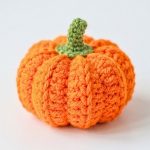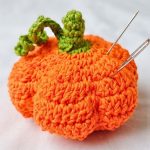
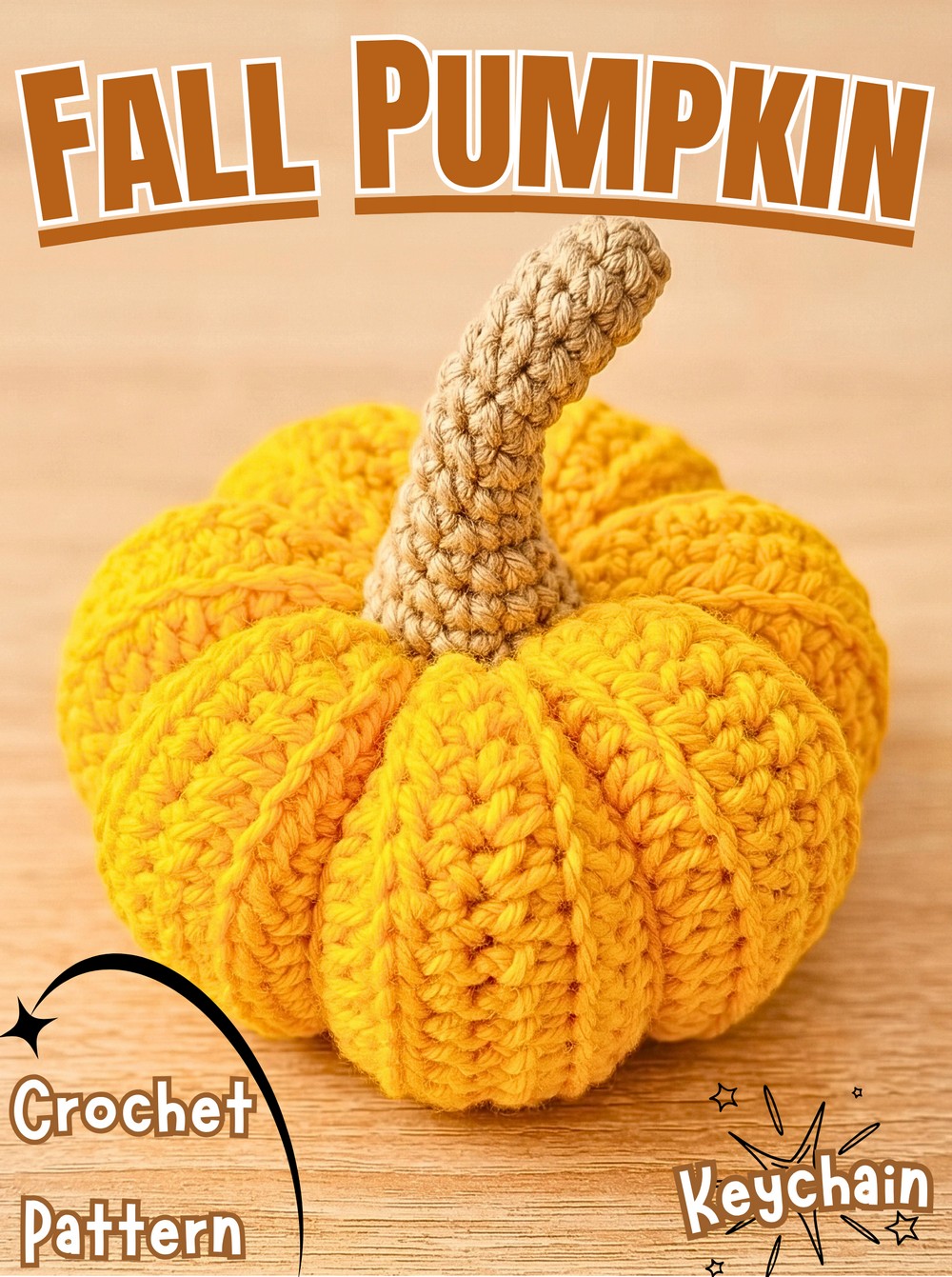
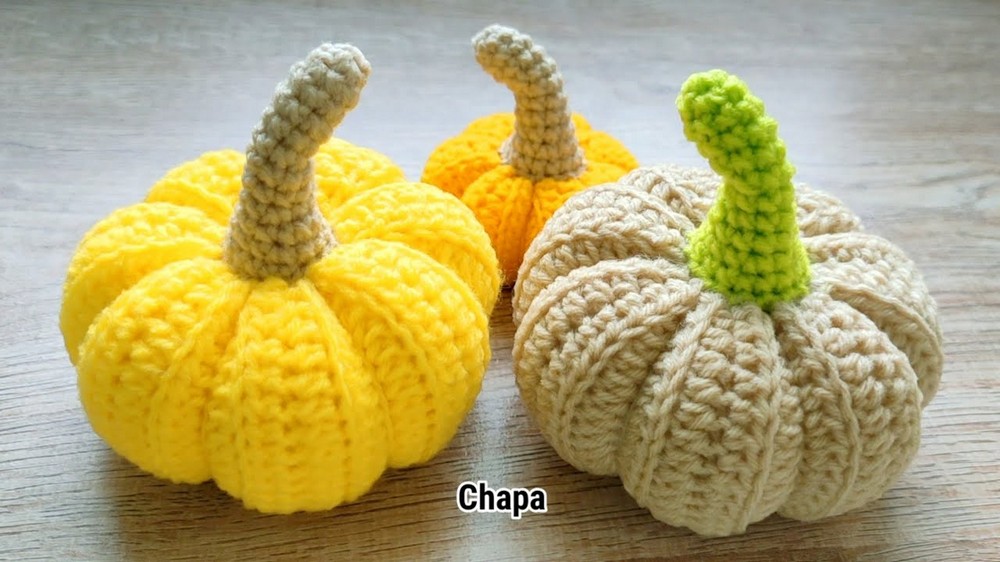
Looking for cozy fall decor with handmade charm? Crochet this ribbed pumpkin in soft colors, with a rounded shape and a curly-looking green stem.
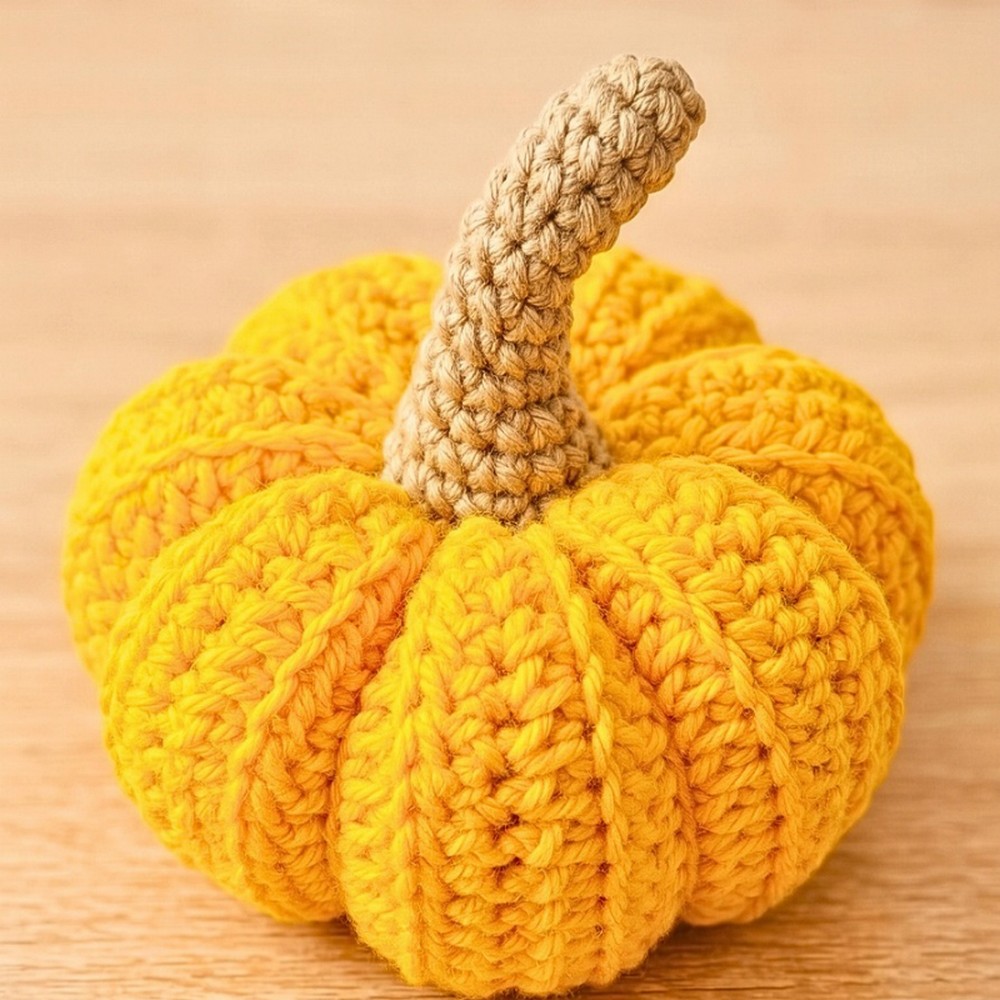
Warm autumn colors and sculpted shapes give these three crochet pumpkins their charming look. Two yellow pumpkins and one off-white pumpkin feature raised ridges, rounded bodies, and long, slightly curved green stems that resemble real pumpkin vines. Their textured surfaces make them lovely seasonal decorations.
This crochet pumpkin pattern uses one ribbed rectangular panel for the body, making it easier to follow than shaping an entire pumpkin in rounds. You will learn to crochet the panel, close and stuff it, create raised pumpkin segments, and attach the green stem, with clear crochet instructions.
Credit Chapa crochet craft
What Makes This Pumpkin Special?
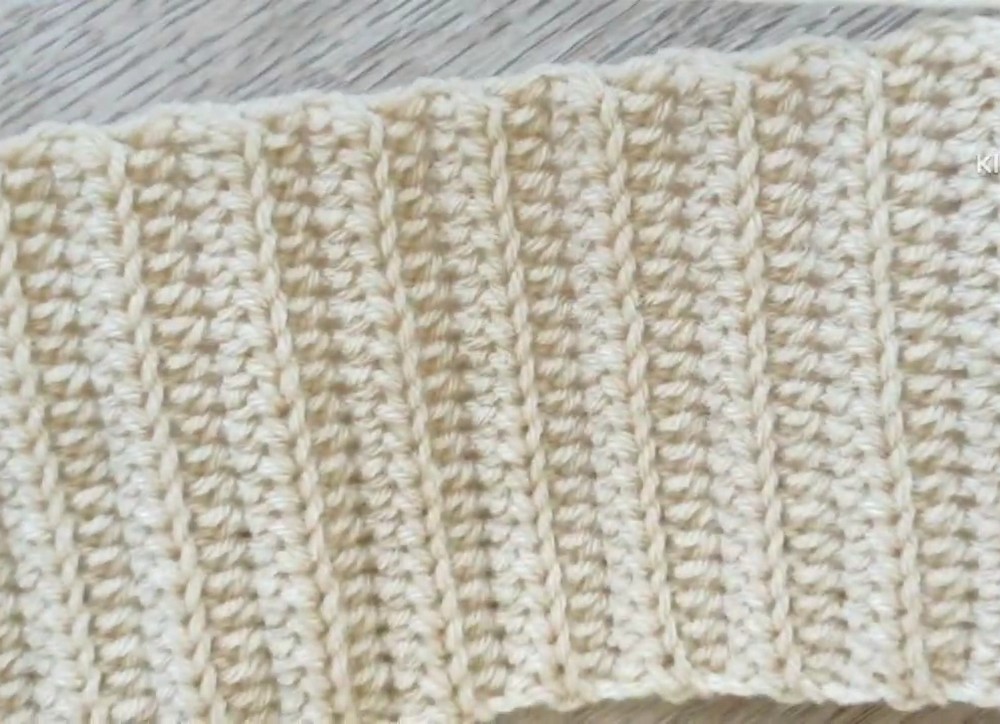
Instead of shaping its body with increases and decreases in continuous rounds, this pumpkin uses a rectangular panel worked in half double crochet through back loops only. This creates natural ridges when you join and gather its edges.
- Beginner-friendly body: You only need to crochet one rectangular panel before assembling your pumpkin.
- Raised pumpkin segments: Yarn pulled vertically through its stuffed body creates distinct ridges.
- Custom colors: Cream, yellow, orange, and green yarn lets each pumpkin have its own autumn look.
- Flexible sizing: Changing yarn weight, hook size, or panel dimensions lets you create different sizes.
Important pattern note: Although the body is worked flat, supplied stem instructions begin with six single crochet stitches inside a magic ring. If you are new to magic rings, you will need to learn this starting technique or use an adjustable loop method you already know.
Yarn Colors and Materials
- Main pumpkin yarn: 4-ply, 100% acrylic yarn in cream, yellow, or another autumn shade.
- Stem yarn: Green yarn.
- Crochet hook: 3 mm hook.
- Stuffing: Polyester fiberfill.
- Finishing tools: Sewing needle, yarn needle, and scissors.
Keep your yarn colors nearby before starting. If you are making a set of three pumpkins, cream and yellow work beautifully together, while green provides a natural contrast for each stem.
Pumpkin Size and Customization
Finished dimensions depend on yarn thickness, hook size, stitch tension, and panel dimensions. Exact measurements are not provided in this pattern, so use these options as general sizing guidance rather than fixed size specifications.
- Small pumpkin: Use finer crochet thread with a suitably smaller hook and a narrower panel.
- Medium pumpkin: Follow supplied pattern with 4-ply yarn and a 3 mm hook.
- Large pumpkin: Use thicker yarn with a suitable larger hook, then increase panel width or height as needed.
To change panel height, adjust your foundation chain. To change pumpkin circumference, work more or fewer rows. Remember that changing either dimension also affects finished proportions.
Basic Crochet Stitches
- Ch: Chain.
- Sl st: Slip stitch.
- Sc: Single crochet.
- Hdc: Half double crochet.
- St(s): Stitch(es).
- Rnd(s): Round(s).
- BLO: Back loop only.
- Inc: Increase; work 2 stitches into one stitch.
- (…) × N: Repeat instructions inside parentheses N times.
Step-by-Step: Crochet Your Pumpkin
Work through each stage in order. First, crochet and join your rectangular panel. Next, gather the bottom, add stuffing, close the top, and shape the ridges. Crochet your stem separately and sew it onto your finished pumpkin.
Step 1: Crochet Ribbed Pumpkin Panel
Begin with your main pumpkin color. Repeated half-double crochet stitches worked through the back loops only create raised lines that become pumpkin ribs after assembly.
Foundation chain: Ch 21.
Row 1: Work 1 hdc into the second chain from the hook, then work 1 hdc into each remaining chain across. You should have 19 stitches.
Row 2: Ch 1, turn, then work 1 hdc into the BLO of each stitch across. You should still have 19 stitches.
Rows 3-28: Repeat Row 2 for each remaining row, working 1 hdc into BLO of every stitch across.
Continue until you have completed 28 rows in total, including Row 1.
Teaching tip: Look at your panel from the front. Back-loop stitches should create visible horizontal ridges. If both loops are accidentally picked up, fabric may look flatter and less textured.
Check your work: Your finished panel should be rectangular, with 19 stitches across and 28 rows. Keep its edges reasonably straight so joining the short edges is easier.
Step 2: Join Panel and Close Bottom
Bring your rectangle’s short starting and ending edges together to form a tube. The ribbed rows should run along its length, creating vertical texture around the pumpkin body.
- Fold panel in half, bringing its short edges together.
- Join yarn with ch 1.
- Work single crochet stitches through both layers to seam edges together.
- Fasten off, leaving a long yarn tail for gathering the bottom opening.
Important stitch-count check: Supplied panel has 19 stitches across, but original seaming instruction specifies 20 sc. These counts do not match. Align corresponding stitches along both edges and check your seam as you work; don’t force an extra stitch into the fabric. If both edges have 19 stitches, use one sc per matching stitch and confirm that edges lie flat.
Close bottom opening:
- Thread long yarn tail onto your sewing needle.
- Pass the needle in and out around the bottom edge, catching the fabric evenly.
- Pull yarn gradually until opening closes.
- Secure yarn with a knot, keeping tail available for finishing if needed.
Teaching tip: Gather fabric gradually rather than pulling hard in one motion. This helps distribute folds evenly and reduces risk of yarn breaking.
Step 3: Stuff Pumpkin Body
Turn your tube into a rounded pumpkin by stuffing it with polyester fiberfill through the open top.
- Add stuffing in small amounts.
- Push fiberfill toward the bottom and around the inside edges.
- Continue filling until the pumpkin feels firm but can still be shaped by hand.
Check your work: Body should hold its rounded shape without feeling rock-hard. Too little stuffing can cause ridges to collapse, while too much can stretch stitches and make closing the top difficult.
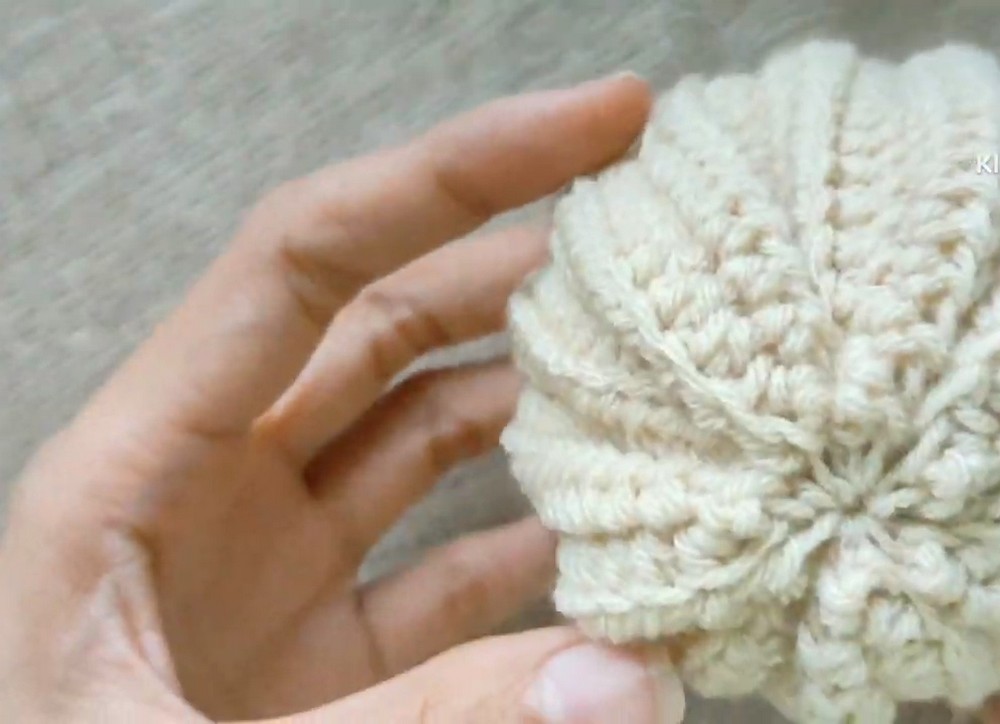
Step 4: Close Top and Form Raised Ridges
Gather the top opening in the same way as the bottom. Then use long yarn to create deep segments around the stuffed body.
Close top:
- Thread yarn onto sewing needle.
- Weave the needle in and out around the top opening edge.
- Pull yarn gradually to close opening securely.
- Secure yarn, leaving enough length for shaping ridges if your chosen yarn tail permits.
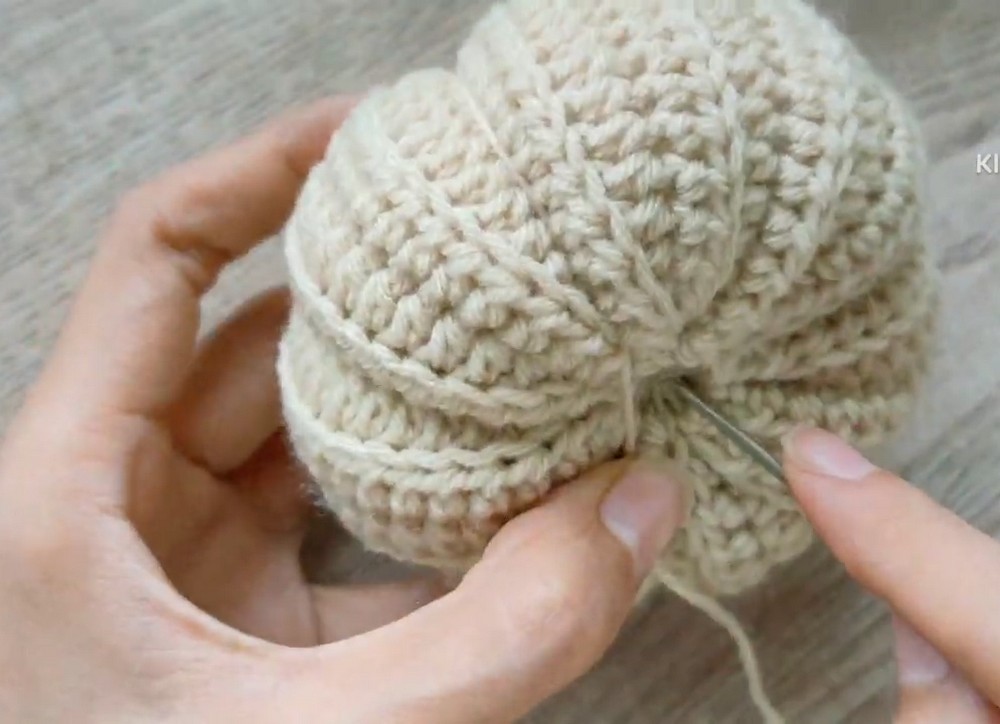
Create pumpkin ridges:
- Take a long piece of yarn and thread it onto your needle.
- Pass the needle down through the center opening at the top, through the stuffed body, and out near the bottom center.
- Bring the yarn back up along the outside surface toward the top.
- Pull gently but firmly to indent the body and create one raised segment.
- Repeat around circumference, spacing each ridge as evenly as possible.
- Secure yarn and weave loose ends into fabric.
Troubleshooting: If one ridge looks deeper than others, ease tension before securing yarn. If the pumpkin flattens, loosen the shaping yarn slightly and redistribute the stuffing with your fingers. Even spacing matters more than pulling every segment extremely tightly.
Step 5: Crochet Green Stem
Use green yarn to crochet the stem separately. Its narrow base and wider upper section create a textured accent for the pumpkin top.
Round 1: Work 6 sc into magic ring.
Round 2: Repeat (2 sc, sc inc) 2 times. You should have 8 stitches.
Round 3: Work 8 sc.
Round 4: Work 8 sc.
Round 5: Work 8 sc.
Round 6: Work 3 sl st, then 5 sc. You should have 8 stitches.
Round 7: Work 8 sc.
Round 8: Repeat (3 sc, sc inc) 2 times. You should have 10 stitches.
Round 9: Work 10 sc.
Round 10: Repeat (1 sc, sc inc) 5 times. You should have 15 stitches.
Round 11: Work 15 sc. Fasten off, leaving a long tail for sewing.
Teaching tip: Keep your slip stitches in Round 6 loose enough to work into comfortably afterward. Tight slip stitches can make it hard to insert your hook when you continue the stem rounds.
Stem shaping note: This stitch sequence creates a narrow, textured stem that can be gently curved when attached. It doesn’t include instructions for making a long, tightly curled vine, so avoid stretching it aggressively or expecting a spiral shape from this pattern alone.
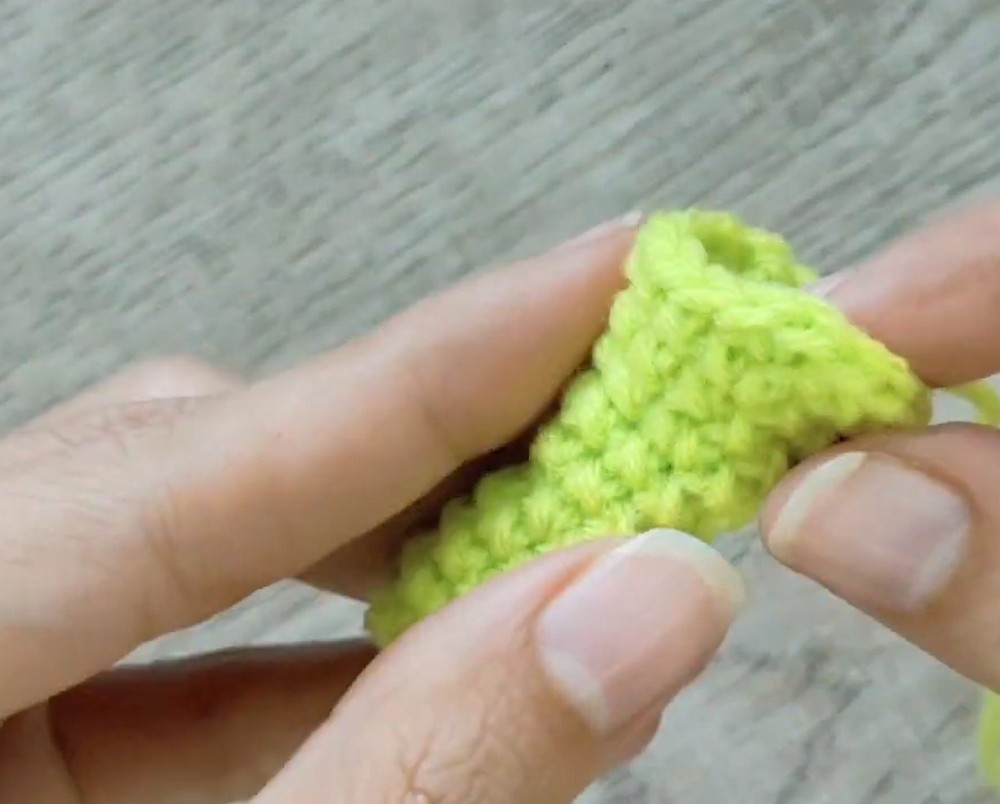
Step 6: Attach Stem and Finish Pumpkin
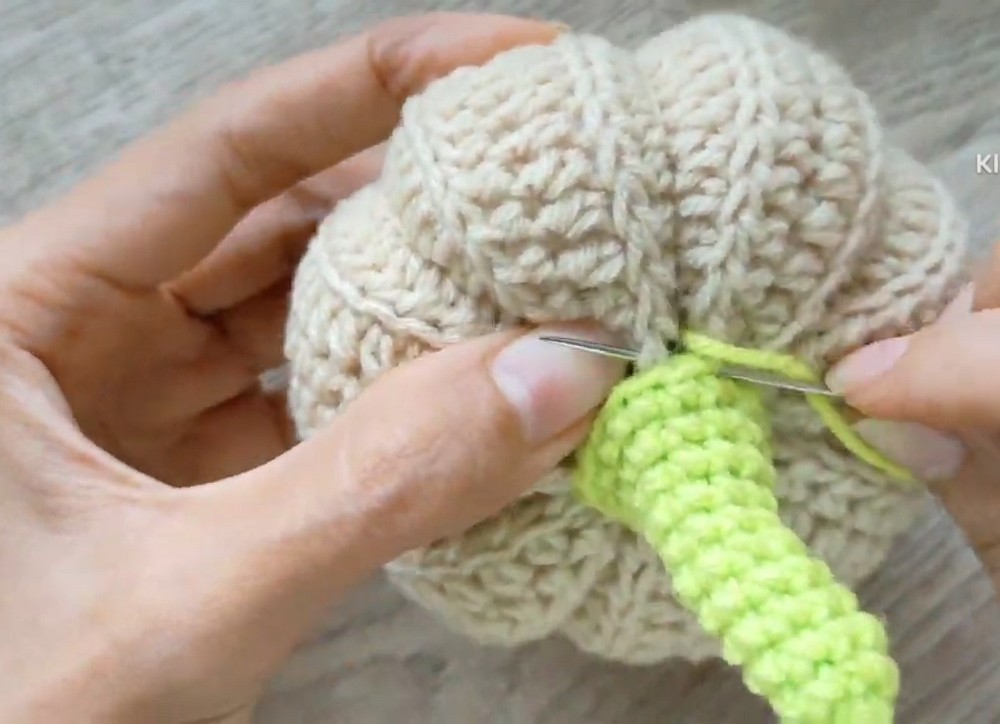
Position the green stem over the gathered top opening. Use the long yarn tail left from the stem to sew it securely to the pumpkin body.
- Center stem over top opening.
- Pass the needle through the stem base and pumpkin fabric several times.
- Check the attachment from different angles, and adjust the stem position if needed.
- Secure yarn, then weave all remaining ends into fabric.
Final finishing check: Make sure the stem sits securely, the top opening is covered, and raised segments remain evenly spaced. Gently reshape pumpkin by hand if stuffing has shifted during assembly.
How to Create Balanced Pumpkin Ridges
Raised segments give pumpkin its recognizable shape, so careful placement makes a noticeable difference.
- Plan spacing: Imagine dividing circumference into equal sections before pulling shaping yarn.
- Use steady tension: Pull each ridge firmly enough to create an indent, but not so tightly that the body becomes distorted.
- Keep stuffing balanced: Redistribute fiberfill whenever one side looks flatter than another.
- Compare opposite sides: Check ridge depth from different angles as you work, rather than waiting until all segments are complete.
Three Color Combination Ideas
Use the supplied stitch pattern to create different autumn looks without changing the basic body construction.
- Sunny autumn: Yellow pumpkin body with green stem.
- Soft neutral: Cream pumpkin body with green stem.
- Traditional fall: Orange pumpkin body with green stem.
For a coordinated display, make several pumpkins in different colors and vary their sizes by changing yarn weight, hook size, or panel dimensions.
Fall Decorating Ideas
Mini crochet pumpkins work well in small seasonal displays because they can sit on shelves, desks, entry tables, or beside other autumn decorations. Grouping different colors creates a simple centerpiece, while a single small pumpkin adds a handmade touch to a gift basket.
If you make pumpkins in multiple sizes, place larger pieces behind smaller ones to create visual depth. Keep stems visible so their green color contrasts with warm pumpkin shades