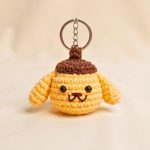
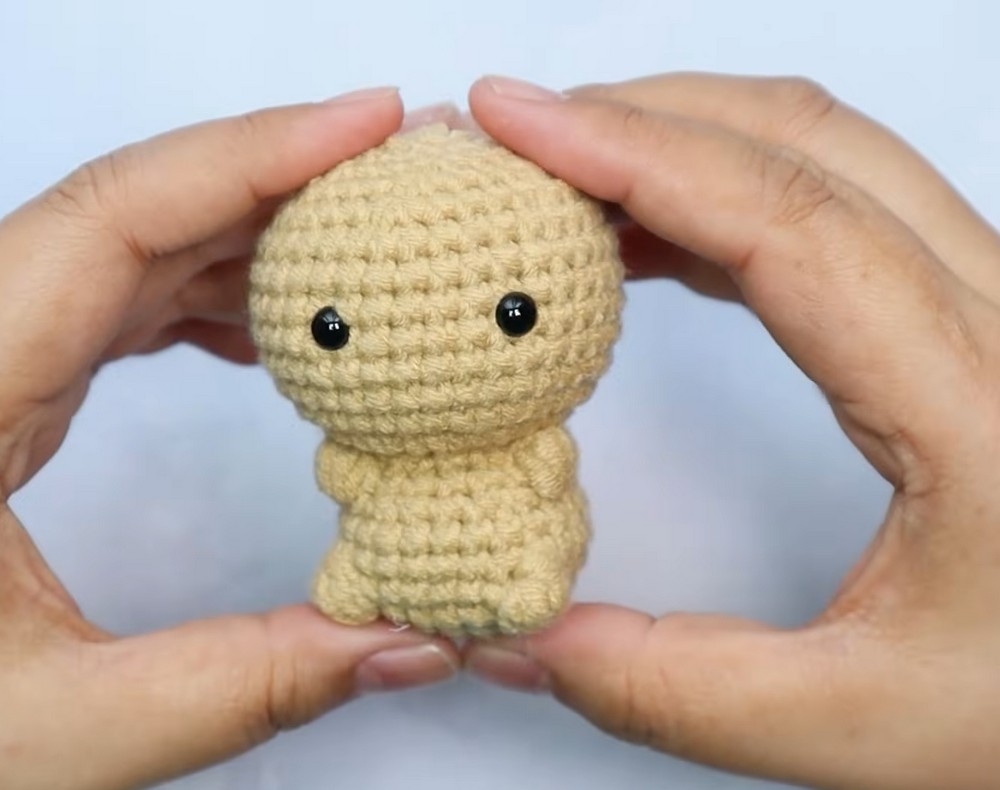
Looking for a charming little amigurumi to add to your handmade collection? This mini teddy bear brings sweet character to a tiny crochet creation.

This mini teddy bear has a round shape, tiny ears, and a sweet little face that make it instantly lovable. Its miniature size and amigurumi style make this crochet bear a delightful handmade piece for displaying on a shelf, decorating a desk, or adding to a collection of cute creations.
Creating this crochet bear involves shaping its body and head, forming the little ears, and bringing its expression to life with carefully placed facial details. The guide walks through these stages so you can follow the pattern in sequence and assemble the finished crochet teddy bear neatly, with each detail completing its distinctive look.
Credit Odinka Studio
Materials & Tools
- Yarn: Light brown 5-ply milk cotton yarn. Light yellow milk cotton or tiny chenille yarn can also be used.
- Crochet Hook: 3/0 hook (2.25 mm).
- Safety Eyes: Small black safety eyes.
- Stuffing: Fiberfill.
- Notions: Tapestry needle and stitch markers.
- Cheek Color: Pink blusher or cosmetic powder with a small blush brush.
Finished Size & Customization
This miniature amigurumi bear is suitable for a small toy or keychain-style accessory. The supplied instructions do not specify an exact finished measurement, so the final size will depend on yarn thickness, hook size, and crochet tension.
- For a soft, fuzzy finish: Substitute tiny chenille yarn, checking that your stitches remain easy to see.
- For a pastel look: Try light yellow milk cotton.
- For a keychain: Add a secure keychain loop at the top after finishing the bear.
- For extra character: Apply a small amount of pink blush to the cheeks and inner ears.

Crochet Abbreviations
- st(s): Stitch(es)
- ch: Chain
- sc: Single crochet
- inc: Increase – work 2 single crochets in the same stitch.
- dec: Decrease – single crochet 2 stitches together.
- dc: Double crochet
- bobble-5dc: Five-double-crochet bobble stitch
- Rnd: Round
- FLO: Front loops only
- [ ] × N: Repeat the instructions inside the brackets the specified number of times.
- ( ): Total stitch count at the end of a round.
Step-by-Step Mini Teddy Bear Pattern
Step 1: Learn the 5-Double-Crochet Bobble Stitch
The bobble stitch creates raised texture within the body. In this pattern, the bobbles are worked directly into designated stitches, so their placement matters just as much as their height.
- Yarn over.
- Insert your hook into the next stitch and yarn over again.
- Pull up a loop, then yarn over and pull through the first 2 loops on your hook. Leave the unfinished double crochet on your hook.
- Repeat the same process four more times in the same stitch.
- You should now have 6 loops on your hook.
- Yarn over and pull through all 6 loops at once.
For this pattern, continue directly with a single crochet in the next stitch rather than adding a chain to secure the bobble.
Teaching tip: Keep the unfinished double crochets at a similar height. This helps the bobble look rounded and consistent instead of uneven or stretched.

Step 2: Begin the Body and Lower Section
The bear is crocheted continuously from the bottom upward, with the body and head formed as one piece. This construction means you won’t need to sew a separate head onto the torso.
Start with light brown milk cotton yarn and your 2.25 mm hook.
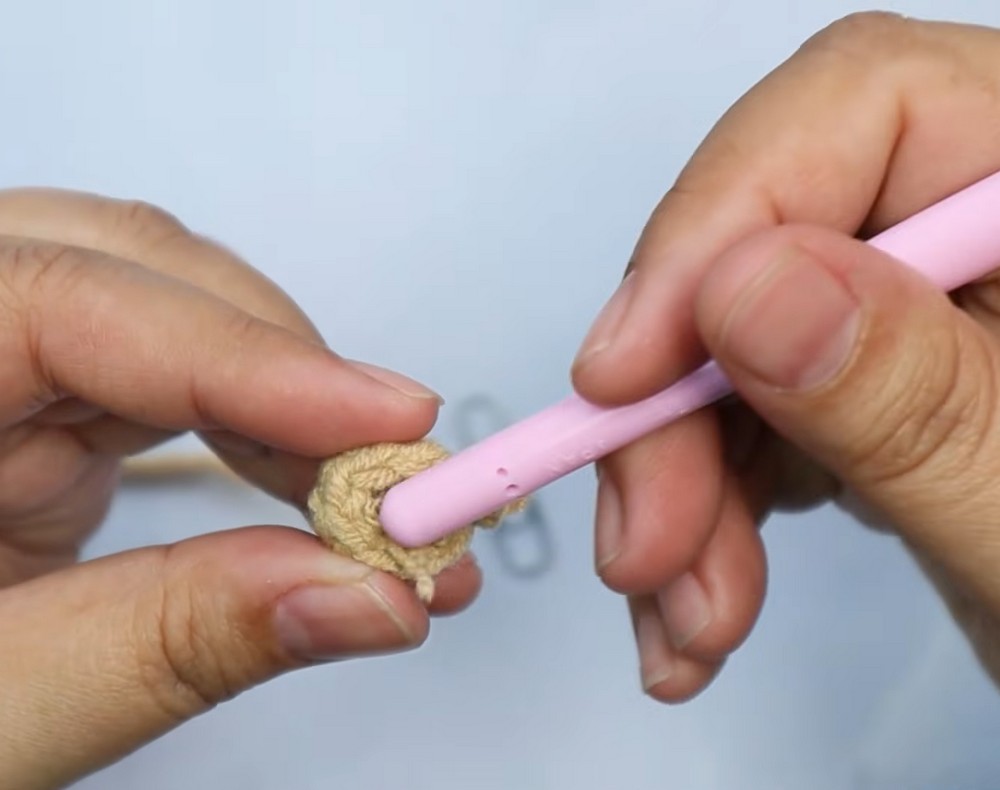
- Rnd 1: Make a magic ring and work 6 sc into it (6). Pull the yarn tail tightly to close the center.
- Rnd 2: [inc] × 6 (12).
- Rnd 3: [1 sc, 1 inc] × 6 (18).
- Rnd 4: 1 bobble-5dc, 1 sc, 1 inc, [2 sc, 1 inc] × 5 (24).
- Rnd 5: 9 sc, 1 bobble-5dc, 6 sc, 1 bobble-5dc, 4 sc (24).
- Rnds 6-7: 1 sc in each stitch around (24).
The first three rounds widen the base gradually. The bobbles in Rounds 4 and 5 introduce raised details while the remaining stitches preserve the rounded outline.
Check your work: After Round 7, you should have 24 stitches around, and the base should hold its shape without curling excessively.
Step 3: Narrow the Body
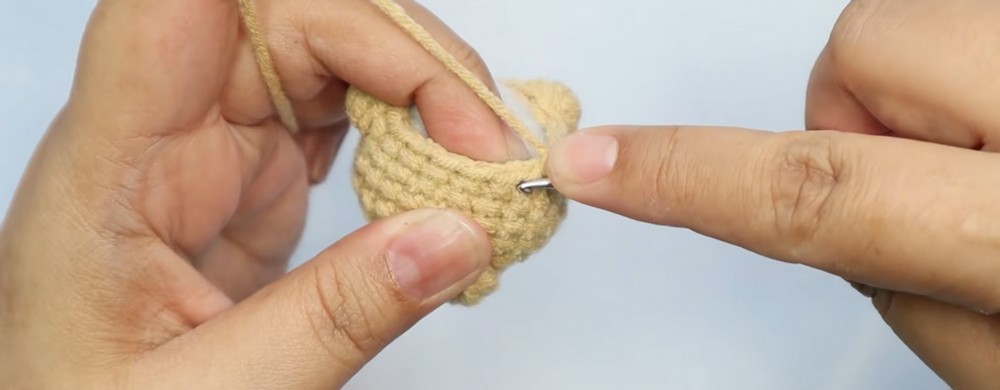
The next rounds reduce the stitch count, shaping the lower body before the neck area begins.
- Rnd 8: [2 sc, 1 dec] × 6 (18).
- Rnd 9: 6 sc, 1 bobble-5dc, 6 sc, 1 bobble-5dc, 4 sc (18).
Firmly stuff the bottom of the body at this stage, following the supplied tutorial. Add small amounts at a time and distribute the fiberfill evenly so the base remains rounded.
- Rnd 10: [1 sc, 1 dec] × 6 (12).
Important: Keep the stuffing below the working stitches. If fiberfill catches on your hook or protrudes between stitches, gently push it inward before continuing.
Step 4: Build the Head Opening
Round 11 changes the working position to create the transition from the narrow body into the wider head.
- Rnd 11: Working in FLO, [inc] × 12 (24).
- Rnd 12: [1 sc, 1 inc] × 12 (36).
- Rnds 13–19: 1 sc in each stitch around (36).
For Round 11, work only into the front loops of the stitches. This leaves the unused back loops visible as a line around the transition.
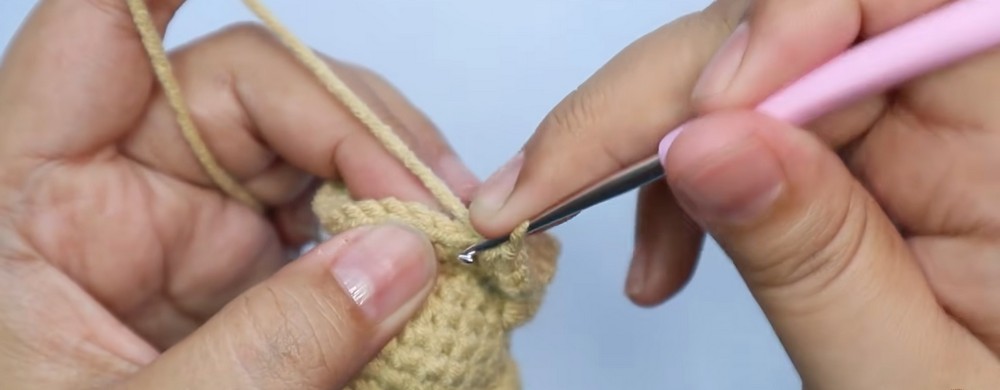
Teaching tip: Check your hook placement before starting the increases. Working through both loops instead of FLO will change the appearance of this round.
After Round 19, the head section should have a consistent circumference of 36 stitches.
Step 5: Position the Safety Eyes
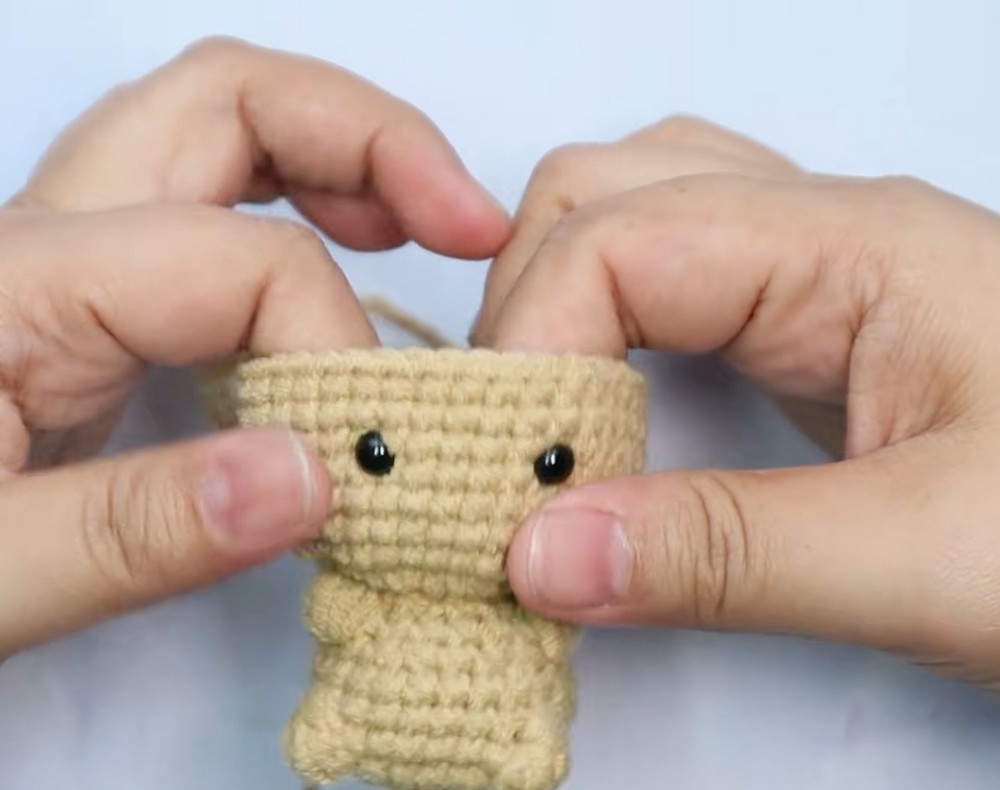
Place the safety eyes between Rounds 16 and 17, leaving approximately 6 stitches between them.
Before fastening the eye backs, view the bear from the front and check that both eyes sit at the same height. The small scale makes even a slight difference noticeable.
Safety note: Safety eyes contain small parts and are unsuitable for toys intended for children under 3 years or anyone likely to put them in their mouth. For those recipients, use embroidered eyes securely instead.
Step 6: Shape and Stuff the Head
Gradually decrease the head opening while adding enough stuffing to create a smooth, rounded shape.
- Rnd 20: [4 sc, 1 dec] × 6 (30).
- Rnd 21: [3 sc, 1 dec] × 6 (24).
- Rnd 22: [2 sc, 1 dec] × 6 (18).
- Rnd 23: [1 sc, 1 dec] × 6 (12).
Add more fiberfill after Round 23. Distribute it evenly around the head, especially near the sides, to prevent flat spots.
- Rnd 24: [dec] × 6 (6).
Cut the yarn, leaving a long finishing tail. Thread it through a tapestry needle and pass the needle through the front loops of the remaining 6 stitches. Pull the opening closed, secure the yarn, and weave the remaining end inside the bear.
Result check: The head should feel evenly filled, with no large gaps around the closing point and no stuffing visible through the stitches.
Step 7: Make Two Matching Ears
The ears are crocheted separately and attached after the main body and head are complete.
Make two ears using the following rounds:
- Rnd 1: Make a magic ring and work 6 sc into it (6). Pull the ring closed.
- Rnd 2: [inc] × 6 (12).
- Rnd 3: [1 sc, 1 dec] × 4 (8).
Fasten off with a slip stitch as specified in the supplied instructions, leaving a long yarn tail for sewing.
Teaching tip: Compare both ears before attaching them. They should have matching stitch counts and similar shapes, which helps the finished bear look balanced.
Step 8: Attach the Ears
Pin the ears onto the head between Rounds 16 and 22, following the placement shown in the tutorial.
Position them symmetrically and check the result from the front before sewing. Adjust their angle slightly if needed to give the bear a rounder or more playful expression.
Use the yarn tails to sew each ear securely to the head. Weave the ends into the surrounding stitches once the attachments are complete.
Step 9: Embroider the Nose and Mouth
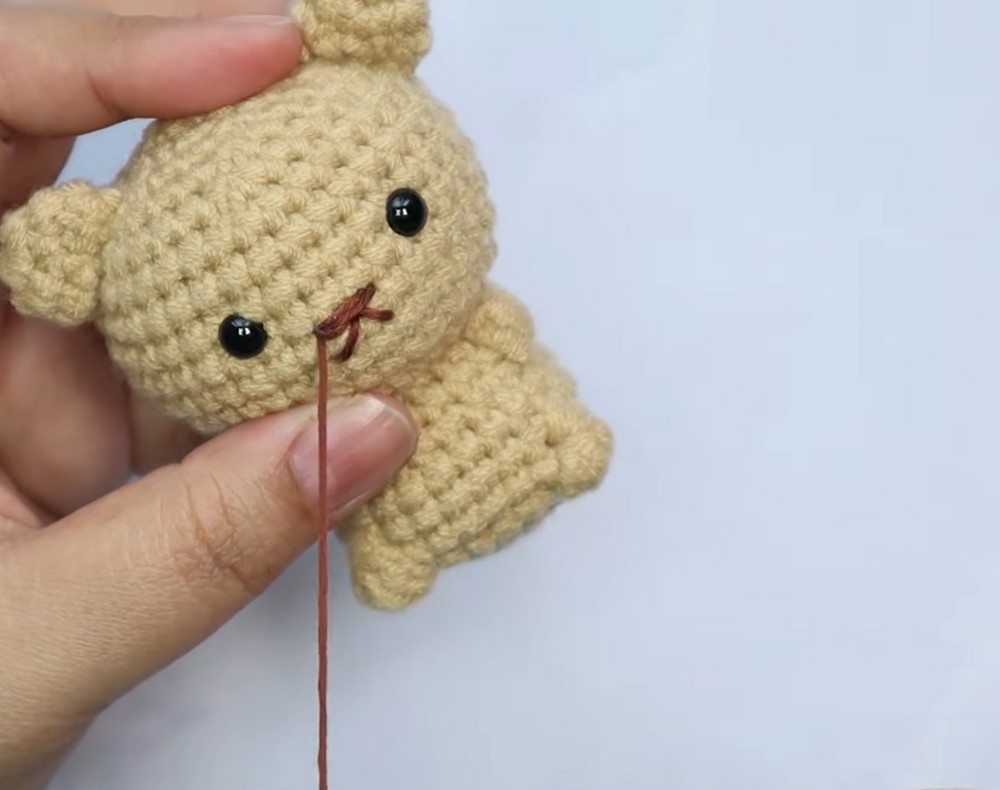
Use brown yarn and a tapestry needle to embroider the nose and mouth between the eyes, approximately one round below the eye line.
Work small, controlled stitches rather than pulling a long length of yarn tightly across the face. This helps the embroidered features remain neat on such a small surface.
Finishing tip: Pause to check the expression before securing the yarn. A centered nose and balanced mouth make a noticeable difference to the finished bear.
Step 10: Add Rosy Cheeks
Dip a small blush brush lightly into pink blusher or cosmetic powder. Apply a little color to each cheek beneath the eyes, then add a small amount to the inner ears.
Build the color gradually. It is easier to add another light layer than to remove too much pigment once it has settled into the yarn.
Care note: If the bear is intended for a young child, avoid loose cosmetic powder and choose a suitable, securely attached alternative instead.
Step 11: Finish or Add a Keychain Loop
Inspect the bear for loose yarn ends, gaps in the seams, or uneven facial details. Weave in remaining ends and trim excess yarn carefully.
If you want to use the bear as a keychain, attach a suitable loop or keychain fitting securely at the top. Check that the attachment is firm before carrying or displaying it.
For a different look, repeat the pattern in light yellow milk cotton or tiny chenille yarn. Keep in mind that changing yarn thickness may alter the finished size and make stitch placement harder to see.
Your miniature teddy bear is complete, with textured bobble details, rounded ears, embroidered facial features, and soft rosy cheeks.