Need a tiny Thanksgiving crochet treat without a complicated amigurumi pattern? This mini turkey leg takes just eight spiral rounds to shape, stuff, and finish.
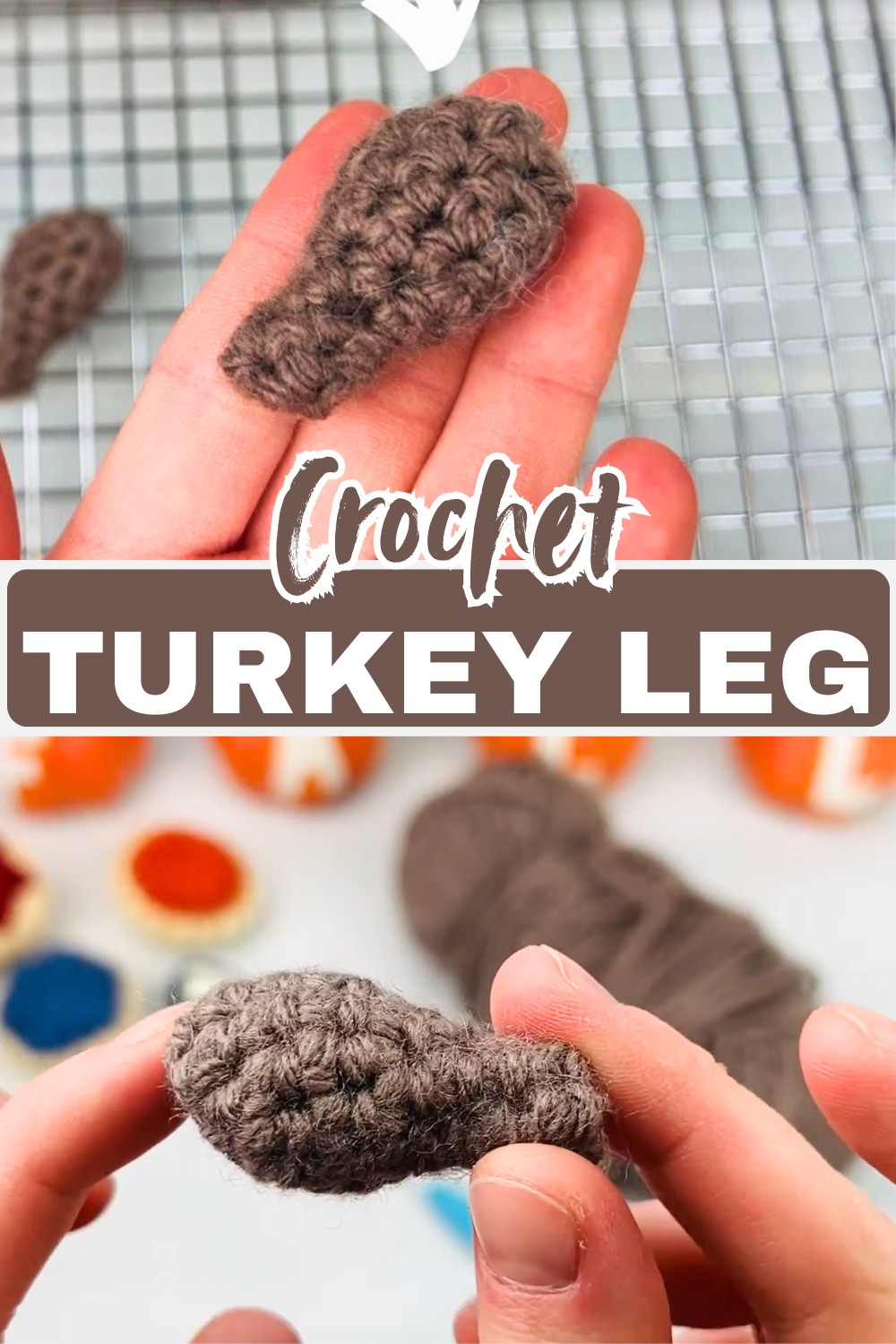
A tiny crochet turkey leg is all about getting the shape right with very few stitches. This miniature amigurumi begins with only four stitches at the narrow bone end, widens through a few increases, then narrows again before the final closure. That compact shape gives it the recognizable look of a little roasted turkey leg while keeping the crochet simple and quick.
The instructions below guide you through the continuous spiral rounds without joined seams, including where to place your stitch marker, when to pause for stuffing, and how to close the final four stitches neatly. You’ll also learn how to work the stuffing into the narrow lower section and hide the finishing tail inside the crochet piece, so the finished leg keeps its smooth, rounded shape.
Materials & Tools Needed
- Yarn in your preferred turkey-leg color, such as light brown or tan
- Crochet hook appropriate for your chosen yarn weight
- Fiberfill stuffing
- Stitch marker
- Yarn needle
- Scissors
Finished Size & Customization Ideas
This pattern creates a miniature amigurumi piece, with the exact finished dimensions depending on your yarn weight, hook size, and tension.
For a larger version, substitute standard yarn with super bulky chenille or blanket yarn and use a larger hook, such as a 6.0 mm or 8.0 mm hook.
You can also add a keyring to the finished piece and turn the miniature turkey leg into a festive Thanksgiving keychain.

Pattern Abbreviations
- MR: Magic Ring / Magic Circle
- sc: Single crochet
- inc: Increase – 2 sc in the same stitch
- dec / sc2tog: Single crochet decrease – sc 2 stitches together
- st(s): Stitch(es)
- Rnd: Round
Working in Continuous Rounds
This turkey leg is crocheted in continuous spiral rounds. Do not join with a slip stitch or chain 1 at the end of each round.
Place a stitch marker in the first stitch of the round and move it upward as you work. This keeps the round count clear and prevents the spiral from gradually drifting.

Shape the Narrow End
The first three rounds create the tiny bone end of the turkey leg. Because there are only four stitches, the opening will feel very small at first—that is intentional.
Rnd 1: Make a Magic Ring and work 4 sc into the ring. Pull the yarn tail firmly to close the center. [4 sts]
Narrow-End Check: Pull the Magic Ring closed before moving on. This gives you a compact starting point instead of leaving an opening that could become visible in the finished piece.
Rnds 2-3: Sc in each st around. [4 sts]
You can place your stitch marker after Round 3 if you find the tiny opening easier to handle once it has gained a little height.
Widen the Leg
The next two rounds increase the stitch count quickly, creating the fuller section of the miniature turkey leg.
Rnd 4: (Inc in the next st, sc in the next st) repeat 2 times. [6 sts]
Rnd 5: Inc in the next 2 sts, sc in the next st, inc in the next 2 sts, sc in the last st. [10 sts]
At this point, the piece should be visibly wider than the four-stitch opening from the first rounds.
Shape Check: The increases are creating the body of the turkey leg rather than simply making the piece longer. If the stitches look slightly crowded as the circumference grows, keep your tension steady rather than pulling the working yarn tighter.
Hold the New Width
Once the leg reaches ten stitches, one plain round lets that increased width settle before the decreases begin.
Rnd 6: Sc in each st around. [10 sts]
This round maintains the current circumference without adding more stitches.

Begin the Taper
The next round starts bringing the top of the turkey leg back inward. This narrowing also prepares the opening for the final stuffing and closure.
Rnd 7: Dec, sc in the next 3 sts, dec, sc in the last 3 sts. [8 sts]
Pause Here for Stuffing
This is the best point to begin filling the miniature leg because the opening is still large enough to work through, while the narrow bottom has already been formed.
Remove the stitch marker and add small amounts of fiberfill. Use the back end of your crochet hook to gently push the stuffing down toward the narrow four-stitch end.
Stuffing Check: Add the fiberfill gradually rather than forcing one large piece through the opening. The goal is a firm, rounded shape without stretching the crochet stitches so far that stuffing becomes visible.
Keep the stuffing inside the wider body of the leg while leaving enough room near the top to work the final decrease round.
Close the Top
The final round reduces the eight stitches to four, leaving a small opening that can be closed securely with the yarn tail.
Rnd 8: Work 4 consecutive dec stitches. [4 sts]
This round becomes quite tight. Keep your tension firm and make sure you pull the tops of the decreases snugly as you work to help prevent gaps.
Cinch the Remaining Stitches
Cut the yarn, leaving a long tail for sewing, and pull the working loop completely through to fasten off.
Thread the yarn tail onto a yarn needle. Weave the needle back and forth through the remaining 4 stitches at the top of the turkey leg.
Pull the yarn tail firmly to draw those stitches together and close the opening completely.
Closure Check: Look at the top from the side as you tighten it. The four remaining stitches should gather inward without pulling the surrounding fabric into a sharp point.
If the knot or closure creates a small bump, take an extra stitch to tack it down and smooth the top.

Hide the Finishing Tail
Insert the needle through the center of the cinched opening and push it out through the side of the turkey leg.
Pull the yarn slightly, then snip the excess close to the surface. Release the tension and allow the remaining end to disappear back inside the stuffed piece.
The finished miniature turkey leg should now have a narrow closed end, a fuller center, and a gently tapered top with no visible loose yarn.
Make It More Than a Miniature
The small scale makes this turkey leg particularly useful for seasonal crochet beyond a single decoration. Leave it as a tiny Thanksgiving accent, attach a keyring for a festive accessory, or scale the pattern up with bulky yarn when you want a much larger soft version.
Because the entire shape is formed through continuous rounds, the finished piece stays compact and seamless while the increases, plain round, and decreases do the work of creating its curved form.