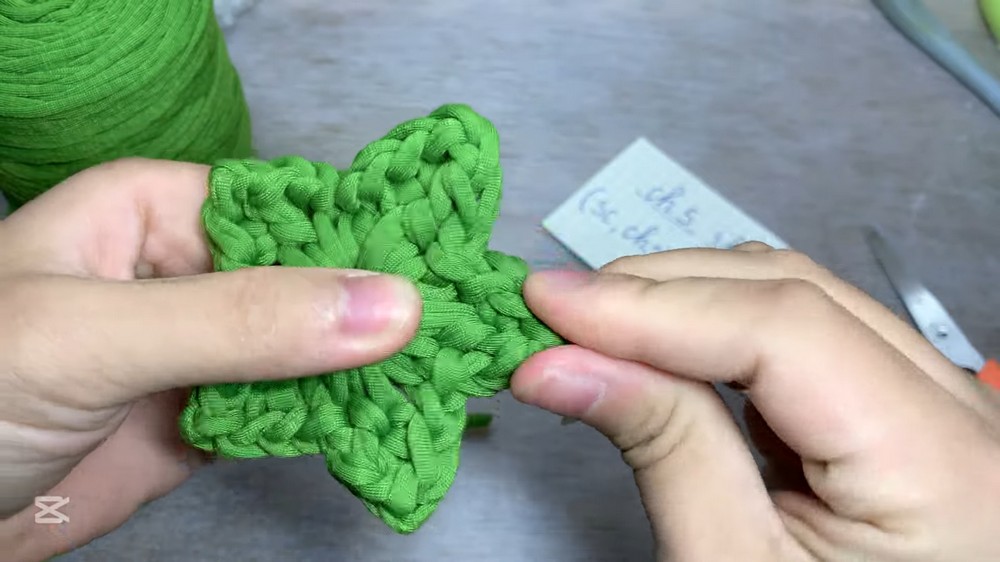
Make a sturdy five-point crochet star from one simple repeating cluster, with an open center that gives this quick decoration a modern geometric look.
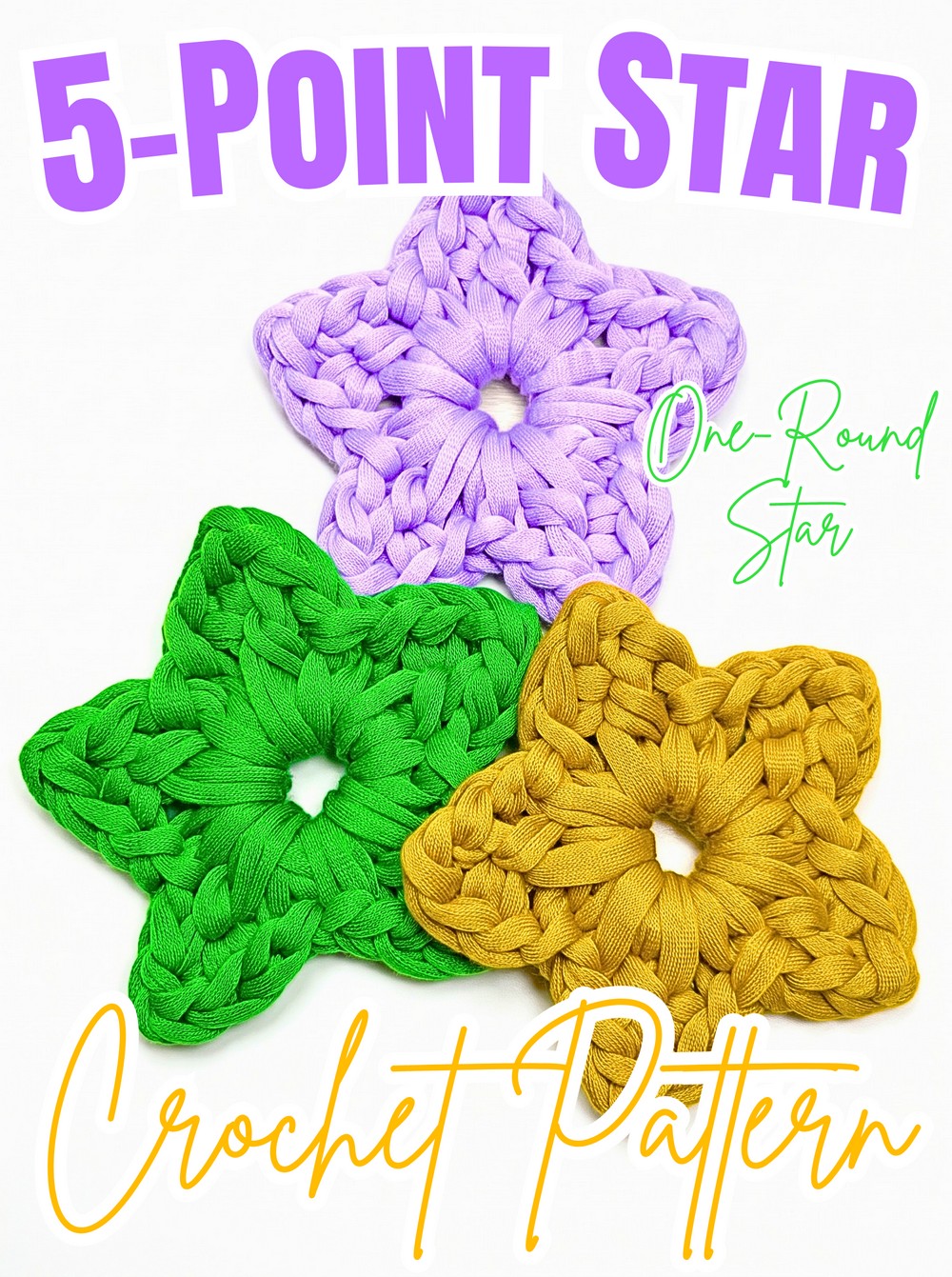
A simple chain ring becomes a crisp five-point crochet star with just one repeating stitch sequence. The chunky yarn gives each point enough definition to hold its shape, while the open center keeps the finished crochet star light and eye-catching.
This crochet pattern walks you through the foundation ring, the five repeating point clusters, and the invisible join that closes the star without leaving an obvious seam. You can also switch to lighter yarn and a smaller hook when you want a more compact version for smaller decorations.
Credit SASAN
Materials & Tools Needed
- Yarn: 5mm-thick yarn. Chunky yarn, cord, or T-shirt yarn is recommended for the structured, defined shape.
- Crochet Hook: 5.0mm.
- Tapestry Needle: For creating the invisible join and weaving in the yarn ends.
- Scissors: For cutting the yarn.
Finished Size & Customization Ideas
The thick 5mm yarn creates a large, sturdy star that works well for keychains, festive garlands, bag charms, or chunky appliqués.
For a smaller star, switch to worsted-weight yarn and use a 4.0mm or 3.5mm crochet hook. The exact finished size will change with the yarn and hook combination.
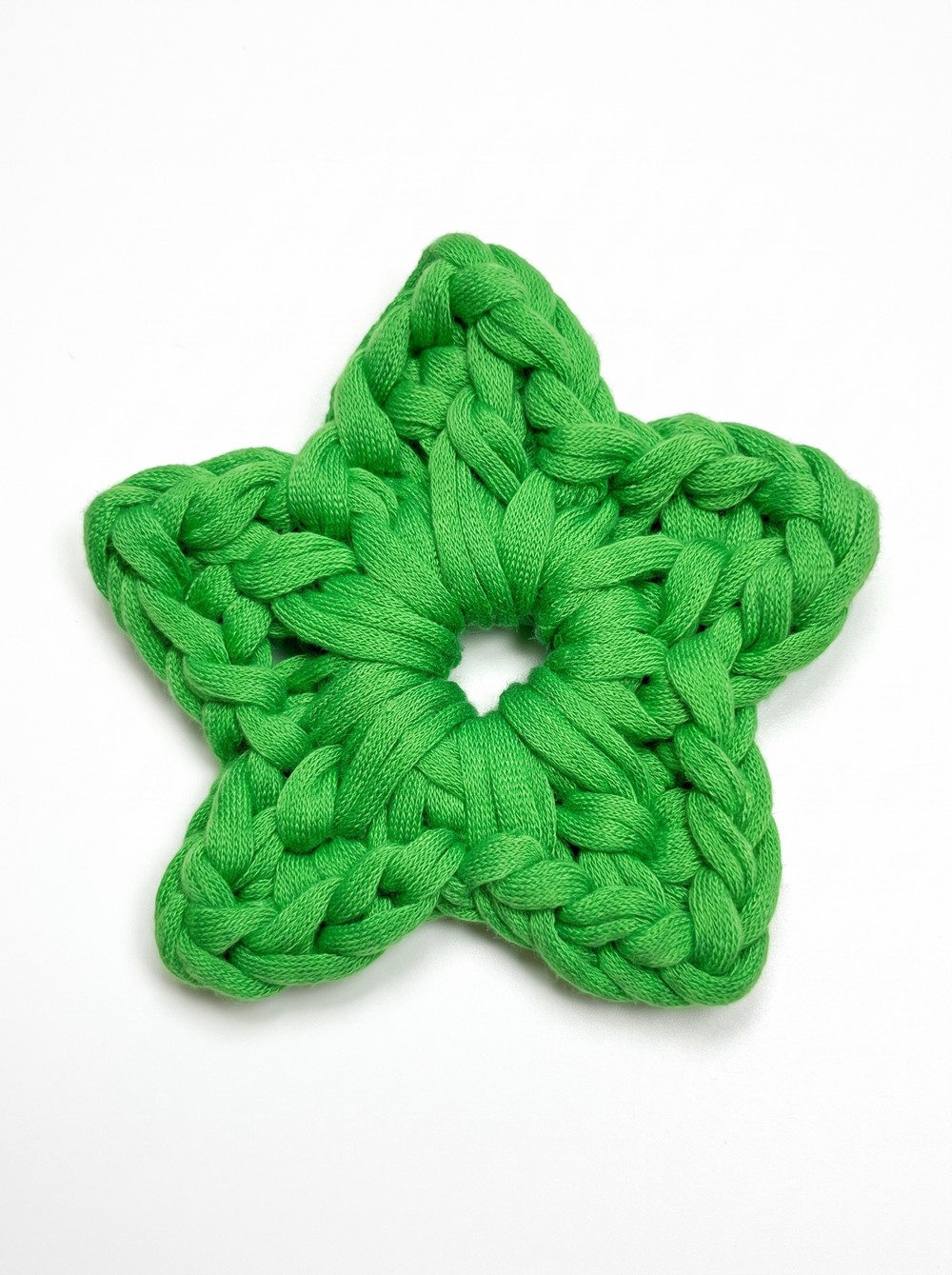
The center remains open rather than being filled in, giving the star its small wreath-like center and distinctive geometric appearance.
Pattern Abbreviations & Terminology
- ch: Chain
- sl st: Slip Stitch
- sc: Single Crochet
- dc: Double Crochet
- st(s): Stitch(es)
- [ … ]: Repeat the instructions within the brackets as directed
Make the Foundation Ring
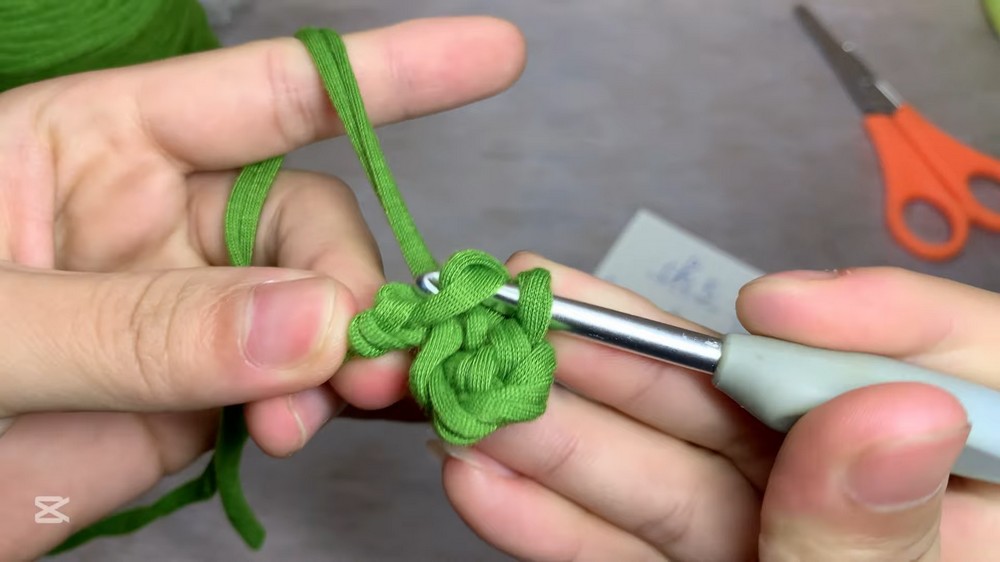
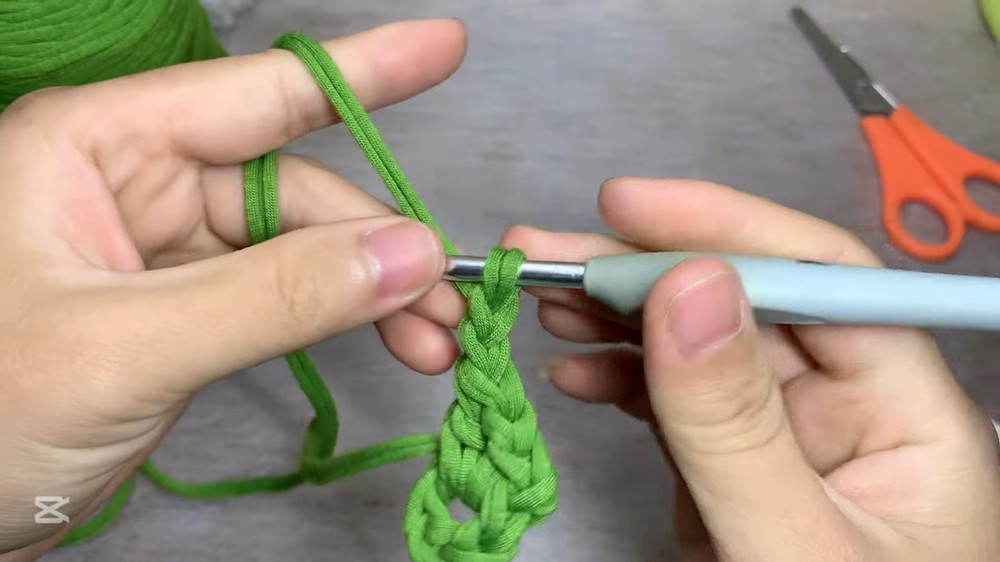
Foundation Ring: Create a slip knot on your hook, ch 5, then sl st into the very first chain made to join the chain into a center ring.
Keep the ring open enough to work several stitches into its center. All of Round 1 will be worked directly into this ring.
Crochet the Five Star Points
Round 1: Ch 1, work 1 sc into the ring, ch 1, work 1 dc into the ring, ch 2, work 1 sc into the ring, ch 1. Repeat [1 sc into the ring, ch 1, 1 dc into the ring, ch 2, 1 sc into the ring, ch 1] four more times to create a total of 5 star points.
The ch-2 spaces create the sharp peaks of the star, so keep those chains relaxed rather than pulling them tightly. By the end of the round, you should have five matching point clusters, each following the same sc, ch 1, dc, ch 2, sc, ch 1 sequence.
Create the Invisible Join
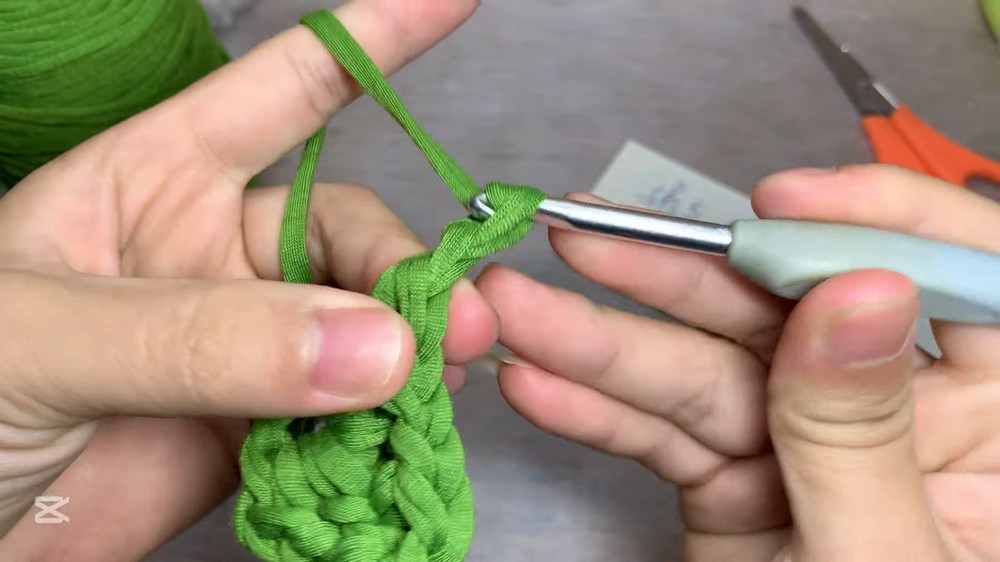
After the final ch 1 of the fifth cluster, do not use a slip stitch to close the round. Instead, cut the yarn, leaving a medium-length tail, and pull the tail straight out through the active loop.
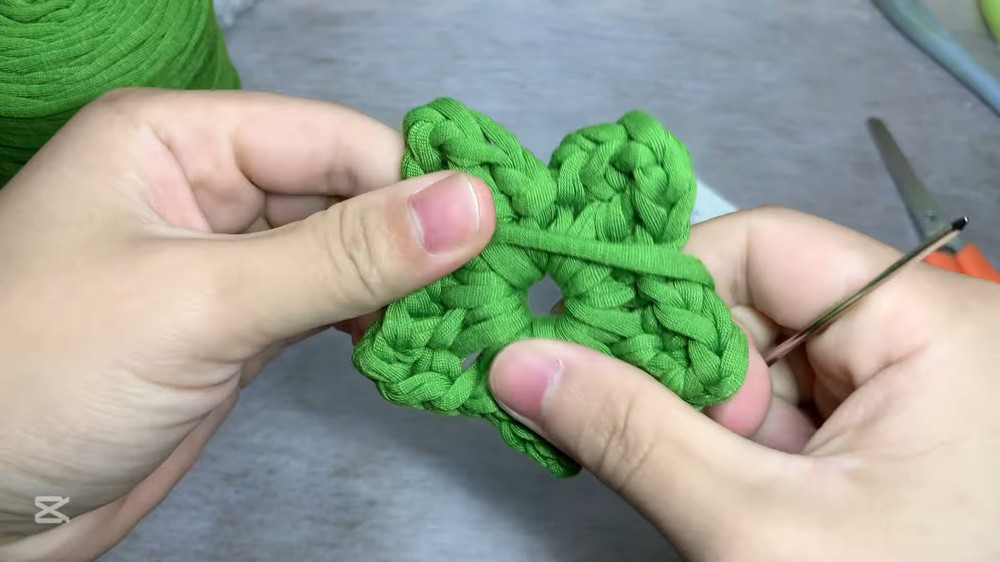
Thread the yarn tail onto a tapestry needle. Insert the needle underneath both top loops of the first sc of the round and pull the yarn from front to back. Then bring the needle back to the final ch 1 and insert it down through the top center, or “V,” of that final chain stitch. Pull gently until the join imitates the appearance of a normal top loop.
This small finishing step keeps the last point connected to the first without creating the raised bump that a regular slip-stitch join can leave.
Weave In the Ends
Turn the star over and weave both the starting and ending yarn tails securely through the thick stitches on the back. Work the tails through several stitches so they stay firmly in place, then trim away the excess yarn.
Once the ends are secured, gently arrange the five points so they sit evenly around the open center. If one point looks tighter or looser than the others, lightly adjust the surrounding stitches before using the star.
Where to Use Your Crochet Star
This one-round star is small enough to make in batches and sturdy enough for several decorative uses. Try it as:
- A festive garland accent
- A bag charm
- A keychain
- A chunky applique
- A handmade holiday decoration
- A small wreath-style embellishment
Once the repeating cluster becomes familiar, the same sequence can be worked quickly without needing a complicated multi-round pattern.