Want a little pumpkin that does more than sit on a shelf? This hollow crochet pumpkin can hold a small LED light inside, giving your fall display a soft glow after dark.
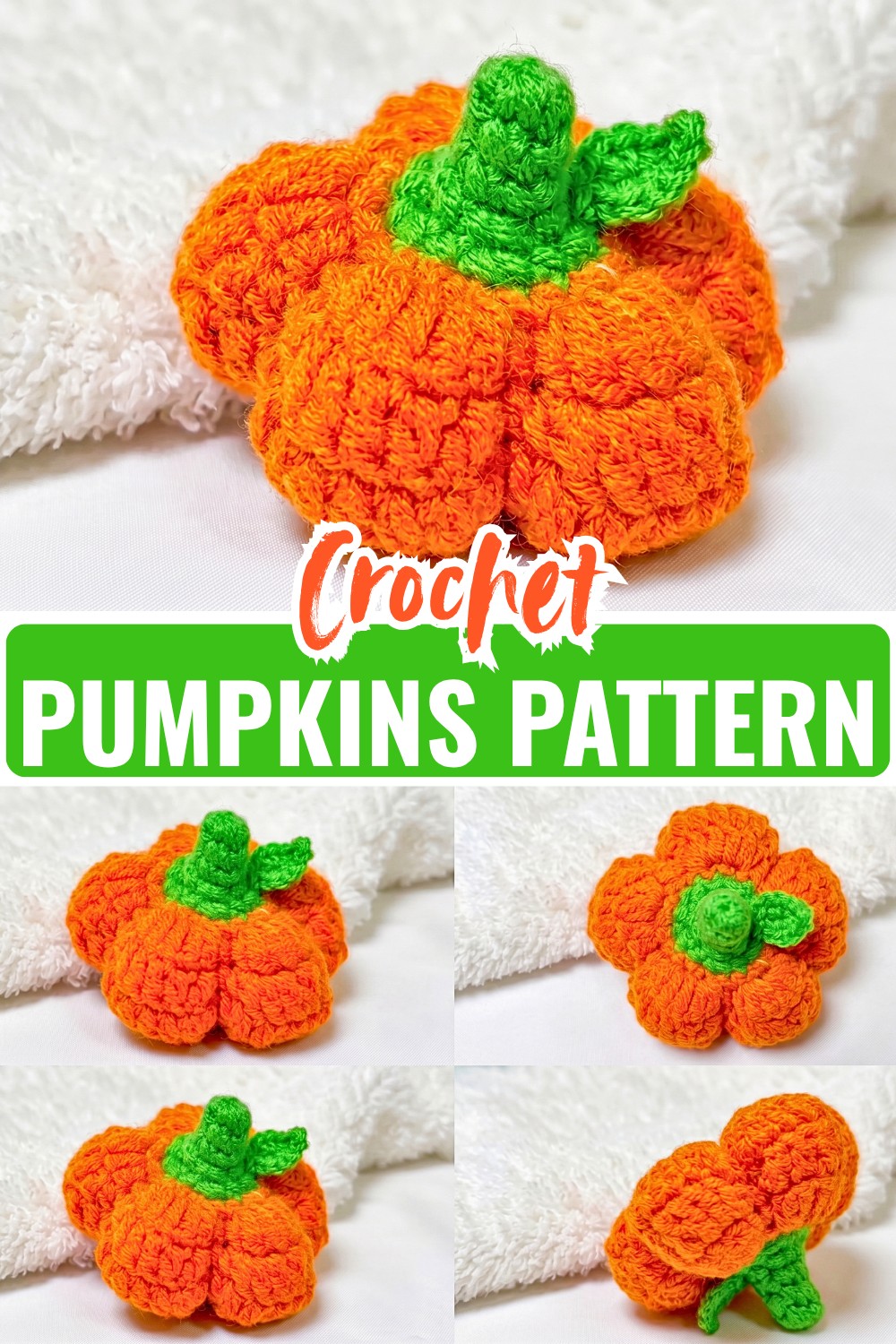
There’s something especially cozy about seeing a handmade crochet pumpkin light up in the evening. This one is crocheted as a hollow shell, so once the pumpkin is finished, you can slip a small battery-operated fairy light inside and let the light shine through the stitches. It works nicely on a bedside table, shelf, mantel, or as part of a Halloween centerpiece.
The construction is also simpler than the finished look might suggest. You’ll crochet the green stem first, change to orange for the pumpkin, build up five rounded sections, and then decrease back down to create the hollow opening underneath.
If you’re wondering how the crochet pumpkin gets its rounded, ribbed shape, the increases and decreases are what create those individual lobes rather than a flat or evenly cylindrical body.
Credit Ochy Crochet
Materials & Tools
- 50g milk cotton yarn: green for the stem and orange for the pumpkin.
- 2 mm crochet hook: A smaller hook helps create a firm shell with enough structure to hold its shape.
- 1-meter battery-operated LED fairy light: This goes inside the finished pumpkin.
- Stitch marker: Helpful for keeping track of joined rounds.
- Yarn needle and scissors: For finishing and weaving in the yarn ends.
Safety note: Use a small battery-operated LED light rather than a heat-producing bulb. Keep the battery pack outside the crocheted pumpkin and follow the light manufacturer’s safety instructions.
Finished Size & Customization
The finished pumpkin is roughly 6–8 cm wide, although your exact size will depend on your yarn and tension.
You can easily change the look without changing the pattern:
- Use cream, white, or muted green instead of orange for a softer autumn palette.
- Add a small black felt face if you want a Jack-o’-lantern.
- Use warm-white LEDs for a cozy glow or another LED color for a more playful display.
Because the pumpkin remains hollow, the important thing is to keep the opening large enough for your chosen light bundle.
Pattern Abbreviations
US crochet terms are used throughout.
- MR: Magic Ring
- ch: Chain
- sc: Single Crochet
- dc: Double Crochet
- inc: Increase – work 2 stitches into the same stitch
- dc-inc: Double crochet increase – work 2 dc into the same stitch
- dec: Decrease – work 2 stitches together
- sl st: Slip Stitch
- st(s): Stitch(es)
- [ ] × 5: Repeat the instructions inside the brackets 5 times
The pumpkin is worked in joined rounds, so each round ends with a slip stitch and the next round begins with a chain.

Step-by-Step Crochet Pumpkin Pattern
Stem
Work the stem in green yarn first. The stem starts narrow and then widens at the base so it transitions neatly into the pumpkin.
Round 1: Make a magic ring, ch 1, work 5 sc into the ring, then sl st to the first sc. (5 sts)
Round 2: Ch 1, work 1 sc in each stitch around, then sl st to join. (5 sts)
Round 3: Ch 1, work 1 sc in each stitch around, then sl st to join. (5 sts)
Round 4: Ch 1, work 2 sc in each stitch around, then sl st to join. (10 sts)
Round 5: Ch 1, work [1 sc, 1 inc] × 5; on the final stitch, change to orange yarn and sl st to join. (15 sts)
Tip: Changing to orange on the final stitch gives you a cleaner color transition because the new yarn is already ready for the first pumpkin round.

Pumpkin Body
Now the pumpkin begins to widen. The increases in these rounds create the five rounded lobes that give the finished pumpkin its characteristic shape.
Round 6: Work [1 sc, 3 sc in the same stitch, 1 sc] × 5, then sl st to join. (25 sts)
Round 7: Work [1 sc, 1 dc-inc, 1 dc, 1 dc-inc, 1 sc] × 5, then sl st to join. (35 sts)
Round 8: Work [1 sc, 1 dc-inc, 3 dc, 1 dc-inc, 1 sc] × 5, then sl st to join. (45 sts)
Round 9: Work [1 sc, 7 dc, 1 sc] × 5, then sl st to join. (45 sts)
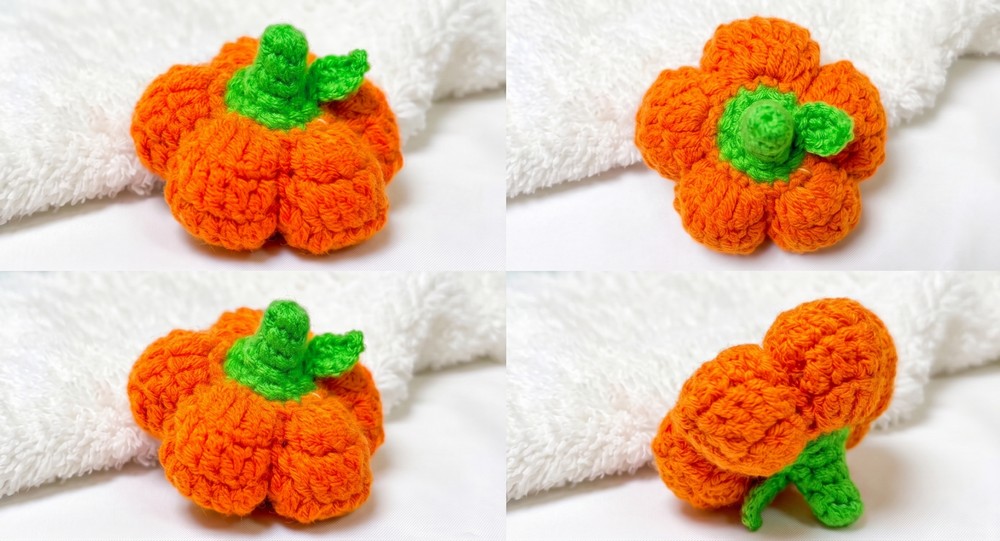
At this point, the pumpkin has reached its widest section. The double crochets give the five sections more height and definition, while the single crochets at the edges help separate the lobes.

Shaping the Pumpkin
The next three rounds reverse the increases. This pulls the lower part of the pumpkin inward while leaving the center hollow.
Round 10: Work [1 sc, 1 dec, 3 sc, 1 dec, 1 sc] × 5, then sl st to join. (35 sts)
Round 11: Work [1 sc, 1 dec, 1 sc, 1 dec, 1 sc] × 5, then sl st to join. (25 sts)
Round 12: Work [3 sc, 1 dec] × 5, then sl st to join. (20 sts)
The opening underneath is intentional. Do not close it—this is where the LED light will be inserted later.

Finishing the Crochet Pumpkin
After Round 12, cut the orange yarn, leaving a short tail. Pull the yarn through the final loop and weave the end securely into the inside of the pumpkin.
Before moving on, gently check the pumpkin’s shape. If the stem has folded inward while crocheting, push it outward from the inside so it stands upright.
Add the Light
Turn the pumpkin upside down and insert the battery-operated LED string through the bottom opening.
Gently place the light bundle inside the hollow center rather than forcing it through the stitches. Keep the battery pack and switch outside the pumpkin so you can turn the light on and off easily.
Once the light is inside, turn the pumpkin upright and arrange the stem and shell until the five lobes sit naturally.
When switched on, the light shines through the crochet fabric, turning the pumpkin into a small seasonal night light.
Finishing Touches
For a simple fall look, you can leave the pumpkin exactly as it is. The ribbed shape and warm light already give it plenty of character.
If you want a Halloween version, add a small Jack-o’-lantern face with black felt. Keep the decorations lightweight so they don’t interfere with the hollow interior or the light.
For a group display, try making several pumpkins in slightly different colors and placing them together on a shelf, table, or centerpiece.
Final Result
Your crochet pumpkin is now ready to glow. During the day, it works as a small handmade fall decoration; after dark, the hollow center lets it become a soft little light.
The nice part of this pattern is that the special effect doesn’t require a complicated finishing technique—the hollow construction is built into the pattern from the beginning. Once you understand why the increases create the lobes and the decreases create the opening, the shape becomes much easier to follow.