Learn how to crochet an even foundation chain with the right hook grip, yarn tension, and simple pull-through motion for starting your next pattern.
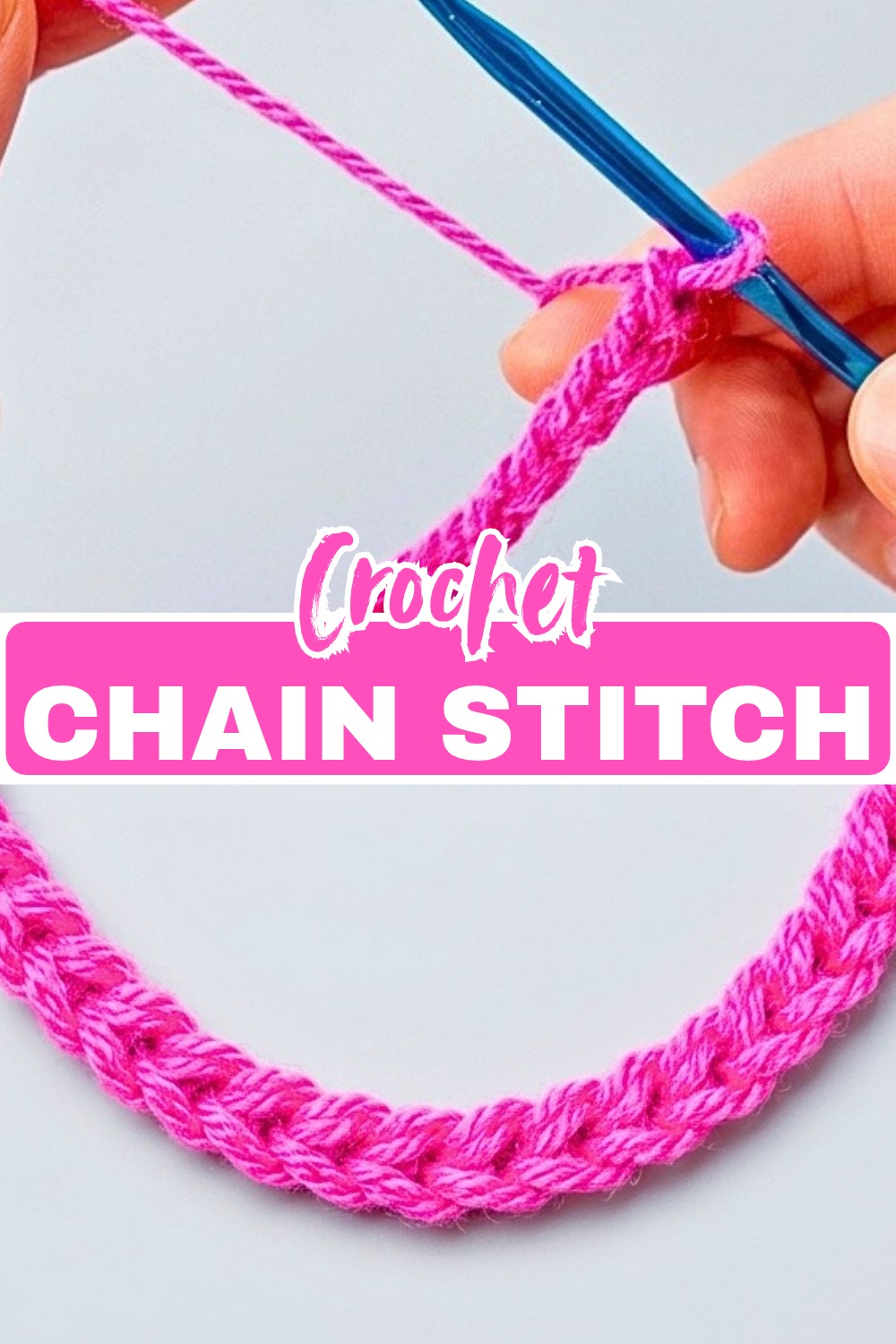
A neat foundation chain gives your crochet work a reliable place to begin. Each chain stitch is small, but together these linked loops create the starting line used for countless crochet patterns, from simple rows to more detailed designs.
The good news is that the motion itself is straightforward once your hands settle into the right positions. In this tutorial, you’ll learn how to make the slip knot, hold the yarn comfortably, yarn over, pull through the loop, and keep repeating the movement without making your crochet chains too tight.
Credit Goga Hook
Materials & Tools Needed
- Yarn of any weight
- Crochet hook appropriate for your chosen yarn
For practice, almost any yarn and matching hook will work. A smooth yarn can make the individual chain loops easier to see while you are learning.
Understanding the Chain Stitch
A chain stitch, abbreviated ch, is made by pulling a yarn over through the loop already sitting on your hook. Repeating that same motion creates a connected line of chain stitches.
The length is completely adjustable. You can continue chaining until you have the number of loops required for the pattern you want to begin. That makes the foundation chain useful for everything from a short starting edge to a long base for a larger piece.
Abbreviations
- ch – Chain stitch
- sl knot – Slip knot
- yo – Yarn over
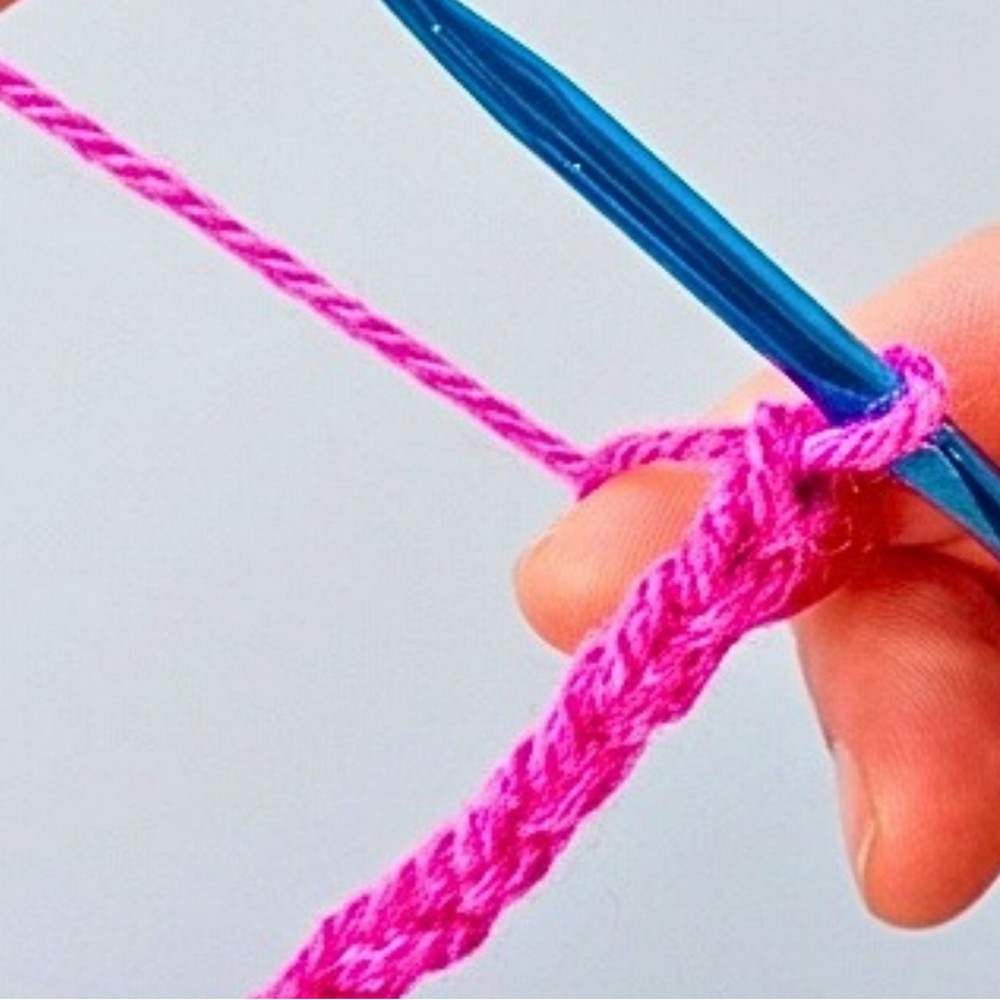
Make the Slip Knot and Set Up Your Hands
Begin by placing a slip knot onto your crochet hook. Hold the yarn so your thumb and middle finger can control the knot and the growing chain while your index finger guides the working yarn.
The most important part at this stage is not to grip the yarn too tightly. Your index finger should maintain enough tension to keep the yarn controlled, but it should still allow the hook to pull the yarn through smoothly.
Teaching Guide: Let the Loop Move
If your chain feels stiff or you have to force the hook through every loop, loosen your yarn tension slightly. A chain stitch needs enough room for the hook to pass through the existing loop without dragging or stretching the yarn.
Your goal is a loop that stays controlled on the hook but can still move easily when you pull the yarn through.
How to Crochet the Chain Stitch
Once your slip knot is on the hook, the same basic motion is repeated for every chain.
Step 1: Start with the tip of your crochet hook pointing upward.
Step 2: Bring the hook underneath and around the working yarn to make a yarn over (yo).
Step 3: Turn the head of the crochet hook slightly downward so it catches the yarn securely.
Step 4: Pull the hooked yarn completely through the existing loop on your hook. One chain stitch is now complete.
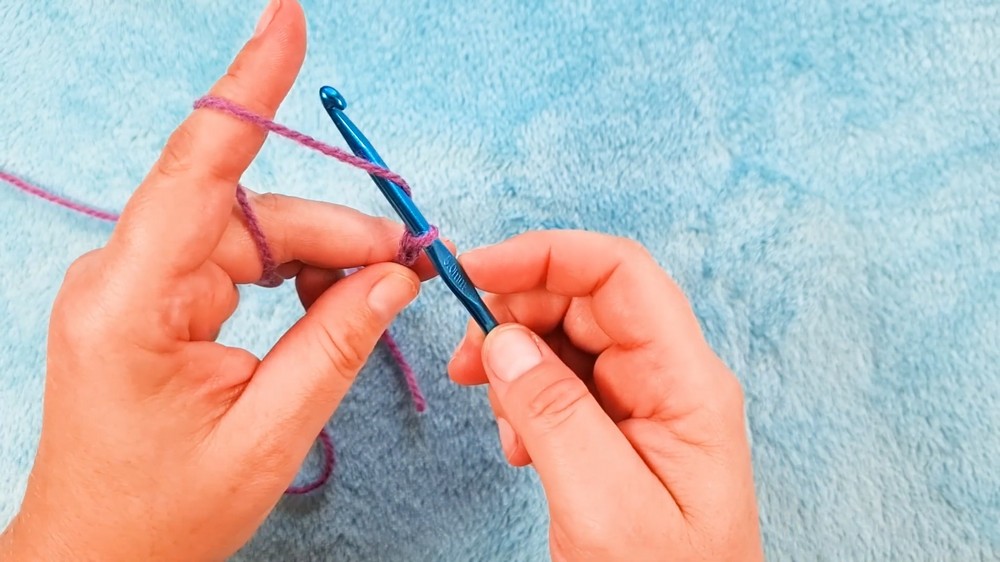
Step 5: Lift the hook upward again to reset your position for the next chain.
Step 6: Release a little tension from your index finger as you pull through so the new chain does not become overly tight.
Step 7: Repeat the same yarn-over, catch, and pull-through motion to create as many chain stitches as you need.
Teaching Guide: Find Your Rhythm
You do not need to make a large movement with the hook for every chain. After the yarn over, a small rotation of the hook helps the yarn sit inside the hook’s throat before you pull through.
Try to make each chain with roughly the same amount of tension. If one loop is pulled very tightly and the next is left loose, the foundation chain can become uneven and harder to work into later.
How to Keep Your Chain Even
As your chain grows, use your thumb and middle finger to hold the newest section close to the hook. This gives you more control over the stitch you are currently making.
As soon as the chain becomes longer, move your fingers forward so you are always holding the section close to the hook rather than trying to control the entire chain at once.
Remember: The loop currently sitting on your hook is not counted as a completed chain stitch. The slip knot also is not counted as a chain stitch. Count the finished links below the hook instead.
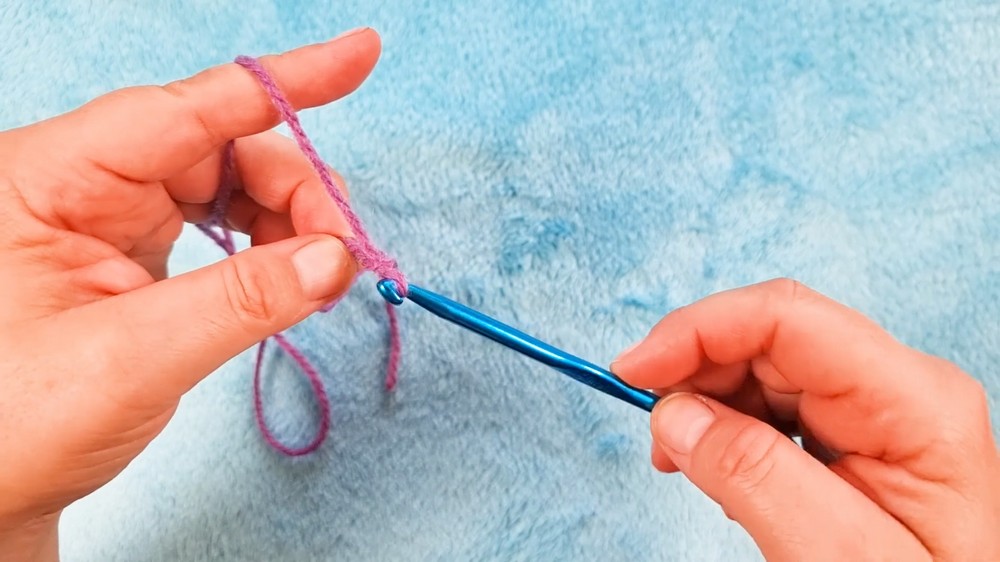
Common Mistake: Pulling the Chain Too Tight
A very tight chain can make the next stage of crochet unnecessarily difficult because there is less room to insert the hook into each chain.
If you notice that your hook barely fits through the loops, stop and loosen your tension before continuing. It is usually easier to correct your grip now than to struggle with an overly tight foundation later.
Adjust the Length for Your Crochet Pattern
There is no fixed number of chains for this practice tutorial. Continue making chain stitches until you reach the number required for the pattern you plan to start.
For one pattern, you may need only a short chain. For another, the foundation may need to stretch across the width of a scarf, blanket, or other crochet piece.
The basic technique remains the same: make a slip knot, yarn over, pull through the loop, and repeat until you reach the required chain count.
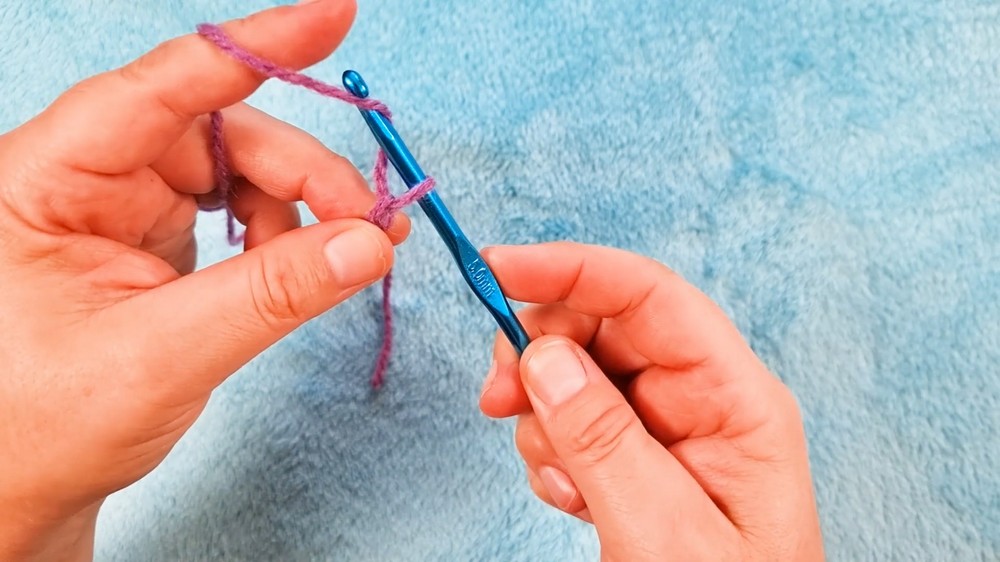
Checking Your Finished Foundation Chain
Before moving on to the next crochet stitch, take a quick look at your chain.
- The stitches should form a connected line of small loops.
- The chain should not be extremely tight or noticeably loose.
- Each completed chain should look reasonably similar in size.
- The loop on your hook should not be included in your count.
- The slip knot should not be included in your count.
If your chain has a few uneven stitches while you are learning, that is completely normal. Focus first on making the hook movement comfortable and consistent. Even tension develops with repetition.
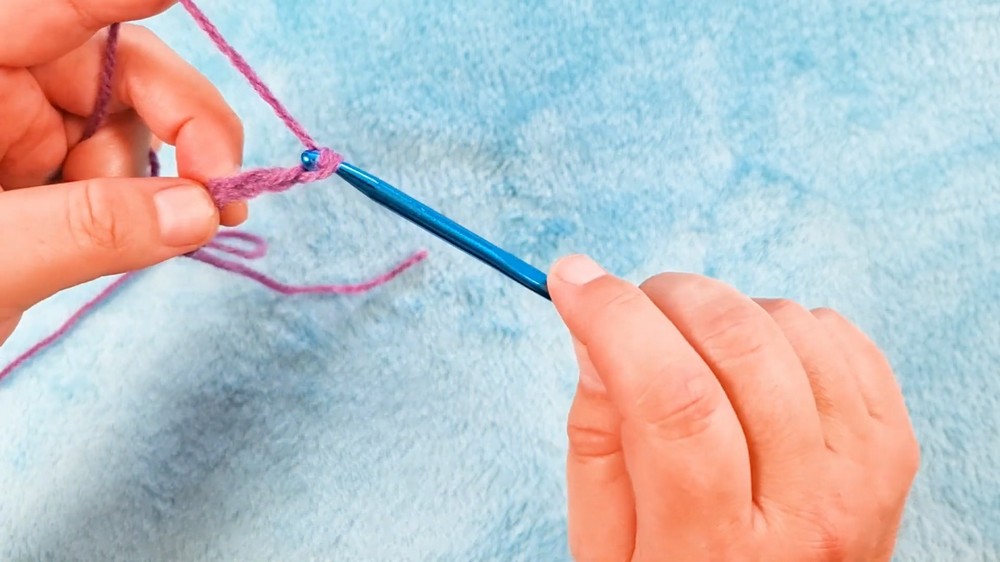
Where the Foundation Chain Leads Next
The foundation chain serves as the starting line for the first row or round of another crochet stitch. Depending on the pattern, you may later work single crochet, half double crochet, double crochet, or another stitch into the chain.
For that reason, learning to make a comfortable, even chain is an important early crochet skill. Once the yarn-over and pull-through motion feels natural, you can concentrate on the next stitch instead of thinking about how to make every chain.